
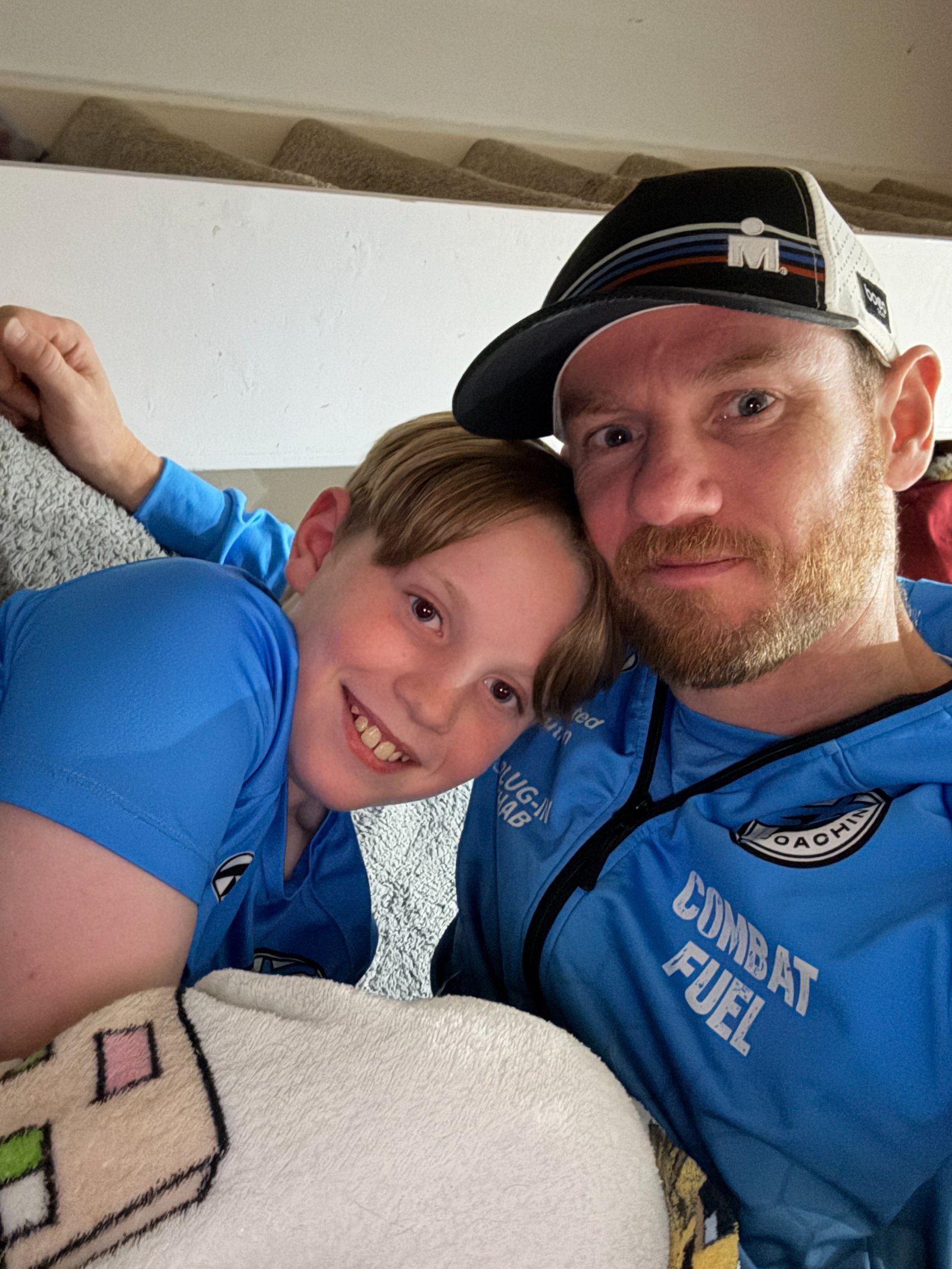
Your training plan should respect the fact that you are a parent. Especially if you are a solo or co-parent, working around alternate weekends, different childcare days, and everything else that comes with raising young kids.
BLUF: If you keep missing the same session every week, that is usually a clue about your plan's design, not a verdict on your discipline.
The seven-day week is a habit, not a law
When most of us think about a training week, we picture the classic seven days. Monday to Sunday, then repeat. Same pattern, over and over.
But your life may not repeat neatly every seven days. So why should your training?
As we all know, a lot of standard plans are built on an assumption: that next week looks exactly like this week. For plenty of people, that is roughly true. For solo and co-parents, it often is not.
Maybe you have your kids one weekend and not the next. Maybe it is specific weekdays. Maybe it changes month to month. That being said, none of that makes you a difficult case. It just means a rigid seven-day template is fighting your actual life.
Missing the same session is a pattern, not a failure
Here is a common example.
Your plan gives you a long run every Sunday. Sensible enough on paper. But you have your kids every other Sunday, and there is no realistic way to disappear for ninety minutes.
So what happens?
You miss it. Then two weeks later, you miss it again. And slowly you start telling yourself a story: I am inconsistent, I am not disciplined enough, I keep letting myself down.
But that may not be the problem at all. The problem may be that the plan was never designed around your reality in the first place.
When a specific session goes missing on a predictable cycle, that is not random. It is a pattern. And patterns are information. They are telling you where your plan and your life are colliding.
Do a proper time audit first
Whether you have a coach or not, this is where an honest time audit earns its place. You cannot build a plan that fits your life until you actually look at your life.
So, firstly I would say map two or three weeks, not one. If your childcare alternates, a single week hides the truth.
Here's what to do:
- Write out a realistic fortnight (or however long your actual cycle runs).
- Mark the days you have your kids, and roughly the ages, because a settled eleven-year-old and a toddler give you very different windows.
- Mark work, commuting, and anything non-negotiable.
- Now look at what is genuinely left. Not the ideal version. The real one.
Be honest about early mornings too. Some parents can train at 5am before the house wakes up. Others cannot, or should not, because sleep is already thin. There is no right answer here. Only your answer.
Let the training cycle match your life cycle
Once you can see the real picture, the fix is often simpler than people expect. You stop forcing a generic week onto your life, and you start building around the windows you actually have.
That might mean:
- Your bigger sessions alternate between the weekends you are child-free.
- Your training block runs on a 10 or 14 day cycle rather than a strict 7.
- The long run moves completely, off Sunday and onto whichever day it fits.
- Your kid weeks lean on shorter, flexible, close-to-home sessions, and your quieter weeks carry the heavier load.
The key message here is this: that is not taking the easy option. It is creating a structure you can actually execute. A plan you complete beats a plan that looks perfect and gets missed. Every time.
How to redistribute the load without losing progress
A fair worry at this point is: if I move things around, do I lose the training effect? Usually not, if you are sensible about it.
Think in terms of the week's total work, not one hero session. If your longest run has to shift, it can still happen, just on a different day. If a full week is impossible, you protect the sessions that matter most and let the rest flex.
For example: on a kid week, you might keep one quality session and one easy session close to home, and accept that the big endurance day waits for your next child-free window. On the lighter week, that endurance day gets its proper slot, and maybe a second bigger effort too.
So, what that means is your progress comes from the pattern across a fortnight, not from ticking every box in seven days. Consistency of stimulus over time is what drives adaptation, and you can achieve that on an uneven weekly rhythm as long as the overall picture is steady. Better to be consistently good than sporadically great.
One caution worth naming: do not try to "make up" for a light week by cramming everything into the next one. Big jumps in load are where a lot of niggles start. If you are unsure how to bridge two very different weeks safely, that is exactly the sort of thing a coach earns their keep on, and if anything ever feels like a genuine injury rather than fatigue, get it looked at properly rather than training through it.
What to do if you coach yourself
Not everyone wants or needs a coach, and you can absolutely build this yourself. Here's what to do:
- Audit your real fortnight, as above.
- Decide your one or two most important sessions per cycle, the ones that genuinely move the needle for your event.
- Anchor those to your most protected windows, usually your child-free days.
- Fill the rest with flexible, moveable sessions that survive a chaotic day.
- Review honestly at the end of each cycle. What actually happened, and why? Adjust the template, not your self-worth.
That last point matters. When something keeps slipping, resist the urge to blame your character. Look at the design first.
The wider point
Being a parent, and especially a solo or co-parent, is not an obstacle to training. It is the context you train inside. A good plan does not pretend that context away. It works with it.
You do not need a plan that looks impressive on paper. You need one that works on a Tuesday when the school run overran, or on the weekend the kids are with you and the long run simply cannot happen.
Say yes to the next session you can realistically do, and let the plan bend around your life rather than the other way round. That is not lowering the bar. That is how you actually get to the start line.
If you have any questions, queries or concerns about building training around your real week, don't sit on them, let me know.