Project Legacy™

The Delivery

Coaching is not about what you get. It is about what you achieve.

That said, it is a fair question to ask what actually happens once you say yes. So here it is, in order: how we get you set up, and what the rhythm looks like from then on.

  1. 01Good fit?
  2. 02Account
  3. 03Team TC
  4. 04Deep dive
  5. 05Base Enablers
  6. 06Testing week
  7. 07Nutrition
  8. 08Roadmap
  9. 09Training starts
Before you read on

Nine steps written out in a list can look like a lot. It is not meant to be a hurdle, and you will not be doing all of it at once.

Everyone is different, and we go at your pace, with what you actually need. Some people move through this in a fortnight. Others take longer, because life is busy and there is no prize for rushing the setup. Either is fine.

Step 01

Are we a good fit?

Before anything else, we find out whether this is right. You complete a short application telling us who you are and what you are chasing, and from there we either get on a call or pick it up on WhatsApp.

Every application is read by me personally. Places are capped at five a month, which is simply the number I can coach properly while doing the job the way it should be done.

Not everyone gets offered a place, and that is the point of this step. If the goal, the timeline and the life around it do not line up yet, I will tell you, and I will tell you what would need to change.

What you leave with: a straight answer, and a clear view of what the road ahead would look like.
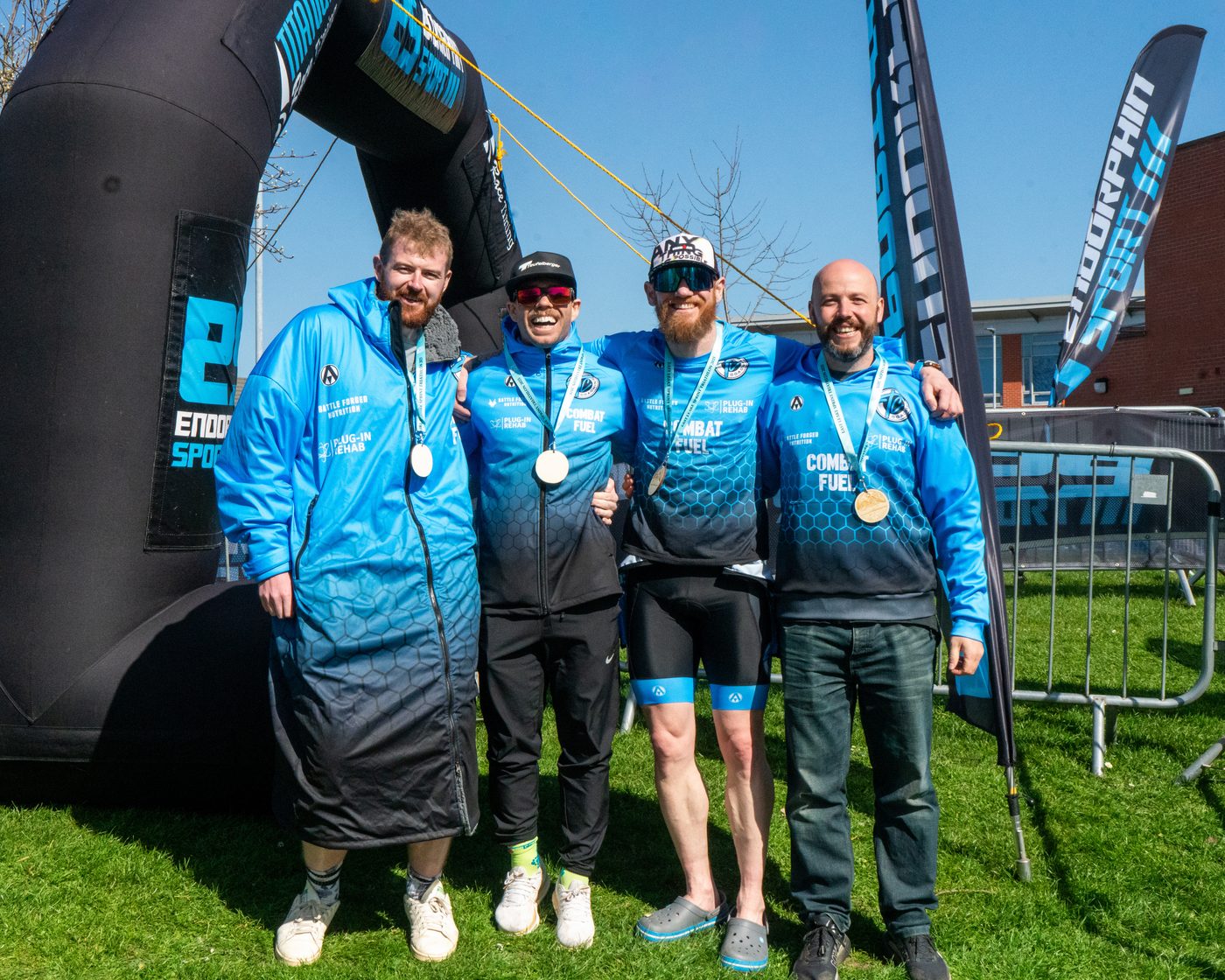
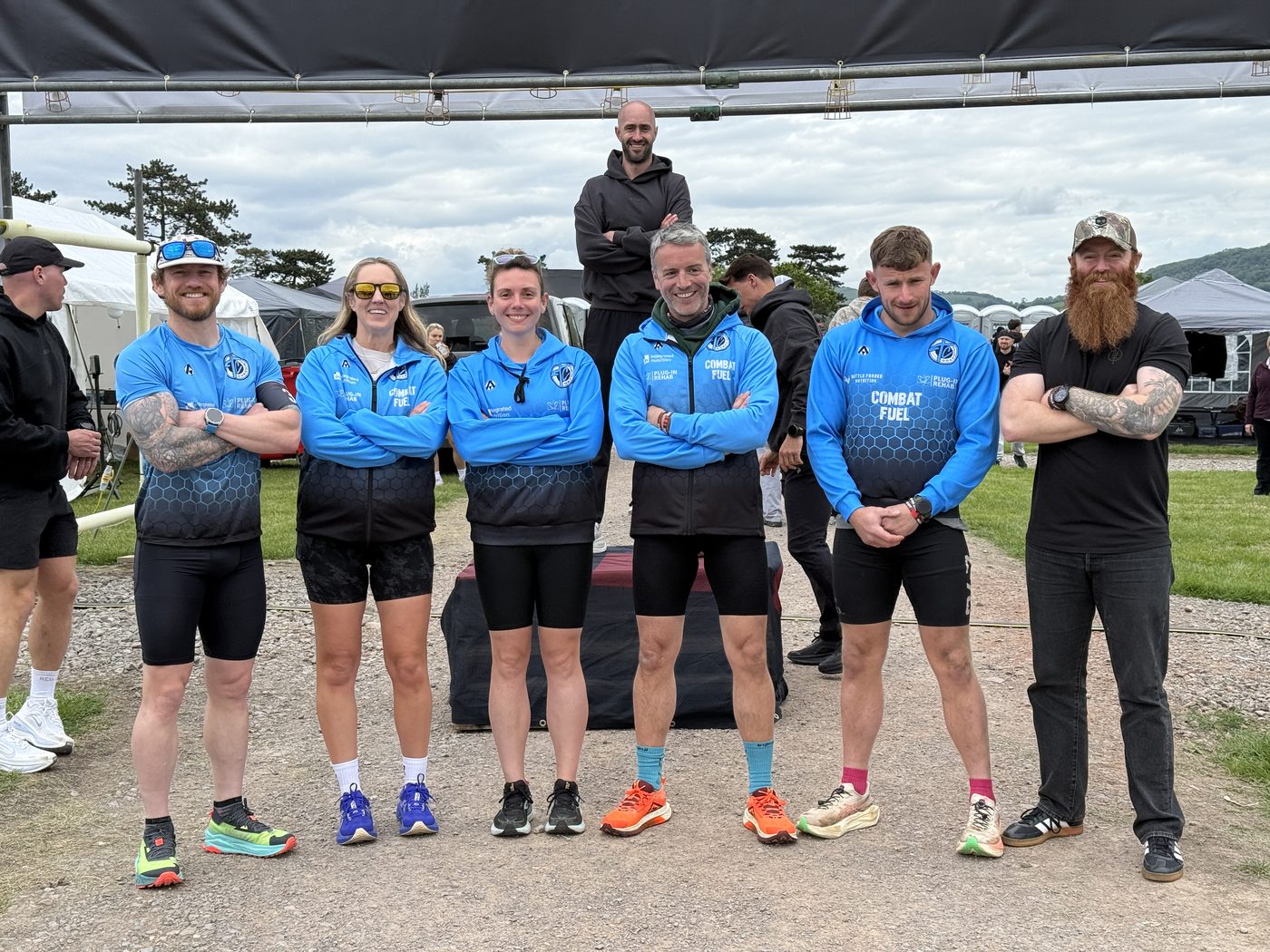
Four Team TC athletes in club kit, medals round their necks, at a race finish
Step 02

Your account is created on the Wayfinder platform.

Wayfinder is the platform we built to run coaching properly, because nothing off the shelf did the job. It becomes your home for everything that is not the training itself.

Your strategy sits in there so you can read back why the plan is shaped the way it is. So do your daily accountability, your measurements and progress photos, your education lessons, direct comms with me, and the same calculators you will find on this site, already loaded with your numbers.

One login, on your phone. You will use it every day, so it is deliberately quick.

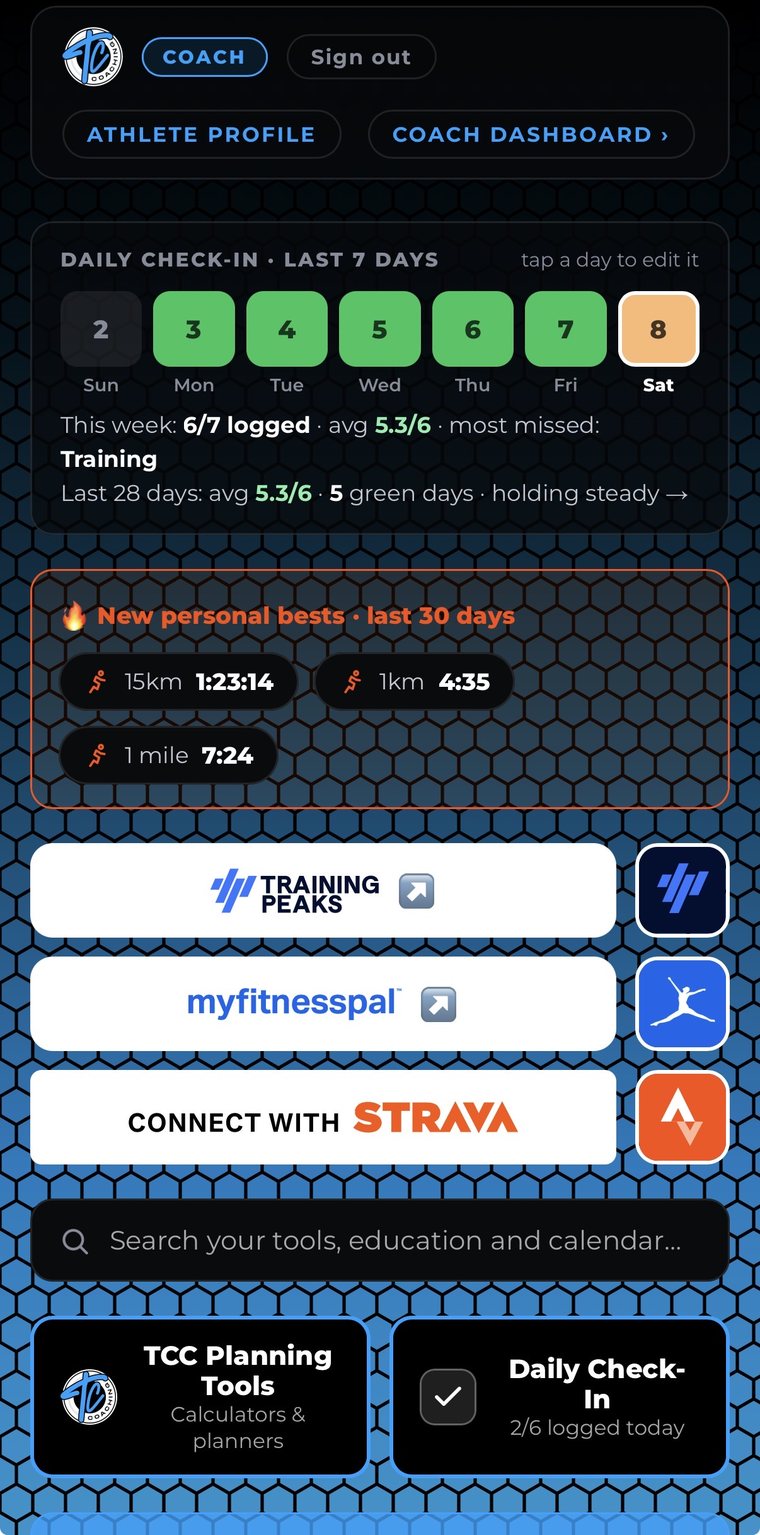
The Wayfinder athlete dashboard on a phone, showing the last seven days of daily check-ins
Your dashboard. The week at a glance, and everything else a tap away.
Step 03

You are introduced to Team TC.

This happens early on purpose, because it is the part almost nobody expects to matter as much as it does.

You join a private group of people doing exactly what you are doing. Not a broadcast channel where a coach posts quotes, but a genuine conversation that runs all day between people training at 5am, travelling for work, and having the same wobbles you will have.

In practice it means you get held to account on the evenings a session feels pointless, the chat keeps moving when the nights get dark, and on race day you discover a group of people you have mostly never met have been tracking you all the way round.

Likeminded is the key word. Everyone in there has chosen the same hard thing, so nobody has to explain why they are up early.
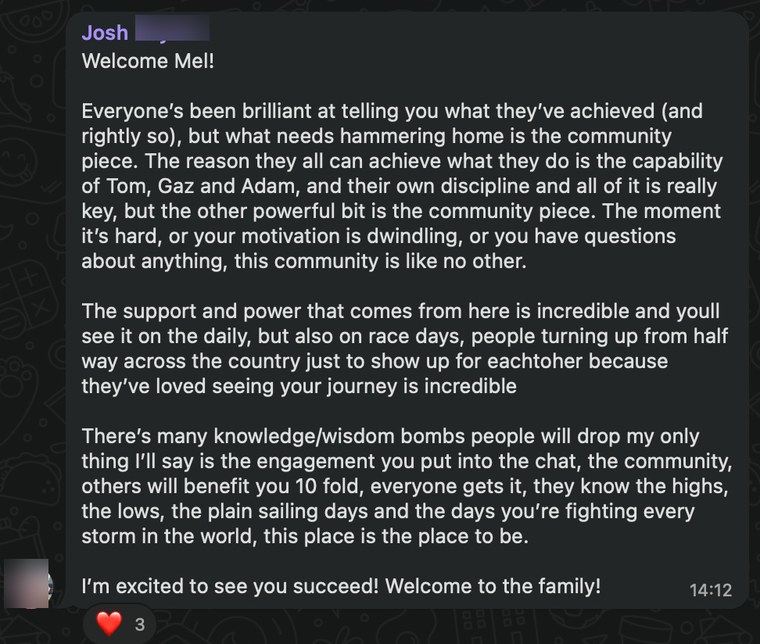
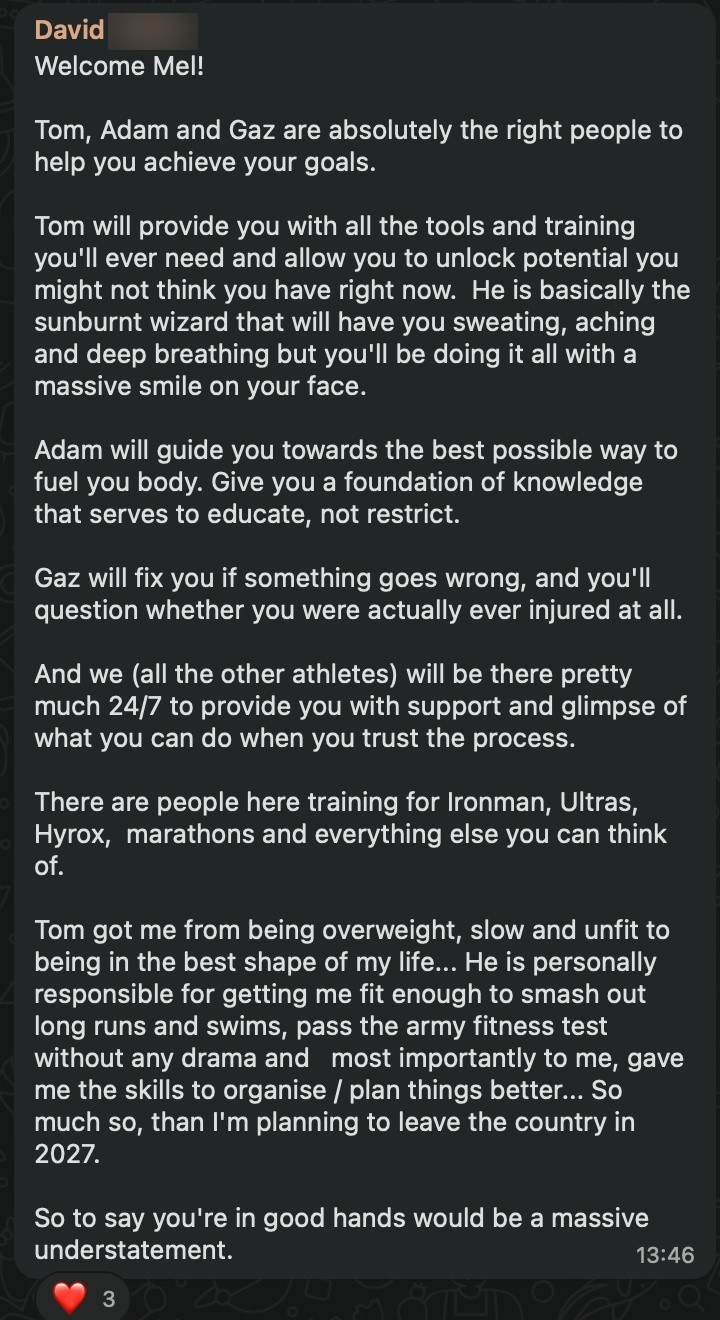
A community welcome message explaining that the support shows up daily and on race days A community welcome message describing what Tom, Adam and Gaz each do for an athlete
Two of the messages that landed for one athlete on the day she joined. Surnames removed.
Step 04

The deep dive, and the kick-off call.

Now we find out who you actually are. The onboarding goes well past height, weight and a goal race.

It covers your why, which is what we come back to when February is cold and dark. Your honest starting point. Your races or targets for the season. A proper time audit, because a plan built on hours you do not have fails in week three. Injury history, work pattern, family commitments, sleep and stress.

Then we get on a call and turn all of that into something concrete. What does good actually look like for you? Not a vague ambition, but the milestones we will aim at along the way, so you always know whether you are on track.

Why it matters: the quality of your plan is capped by the quality of what you tell me here. It takes a while. It is meant to.
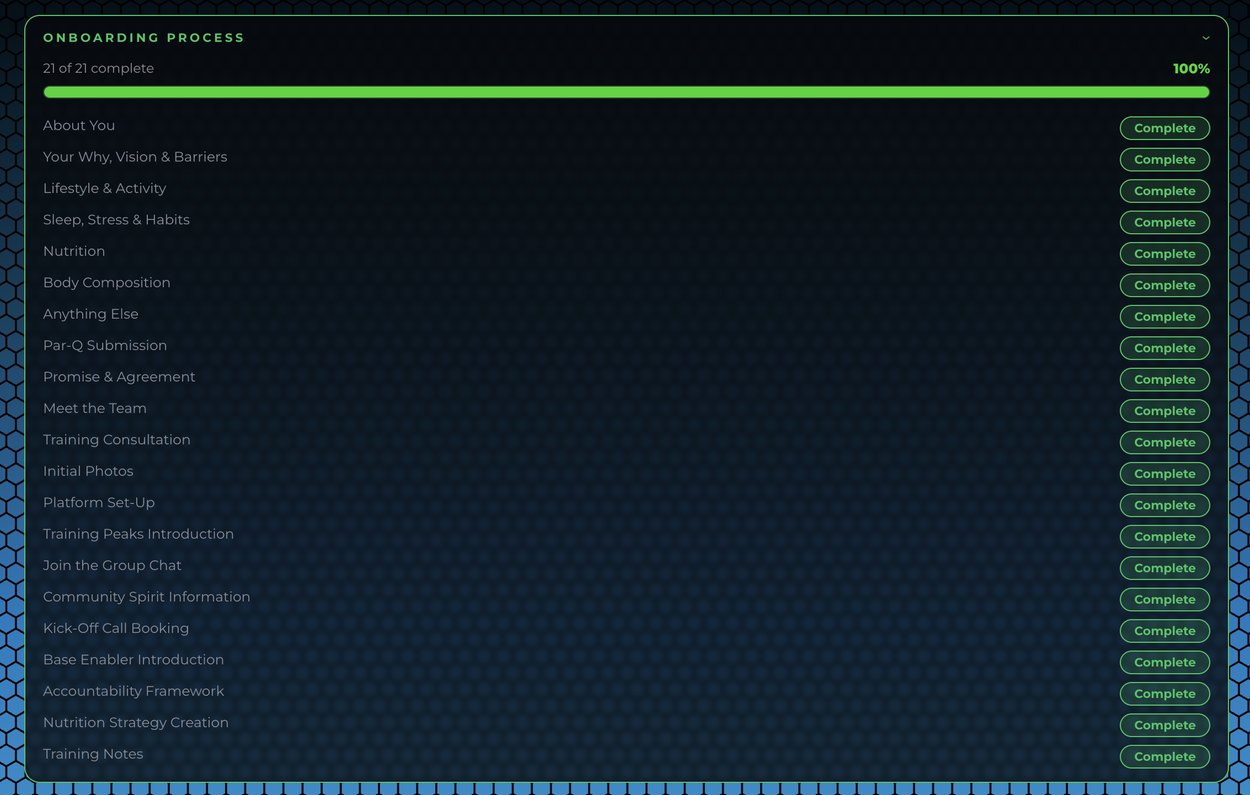
An athlete's onboarding process, twenty-one modules from About You and Your Why through to the accountability framework, all marked complete
Twenty-one modules, from your why through to your accountability framework and your nutrition strategy. This is one athlete, fully onboarded.
Step 05

We set your Base Enablers.

Base Enablers are the daily foundations everything else is built on. Sleep, hydration, steps, and the handful of non-negotiables that decide whether the training you do actually turns into fitness.

They are set for you, from your own starting point, rather than pulled off a generic chart. Then they get tracked with a daily check-in that takes about ninety seconds. Six taps, deliberately quick, because a check-in that takes ten minutes is one nobody does by week four.

The value is not any single day, it is the pattern. After a few weeks you start seeing things you would never have spotted: that your training slips the week after poor sleep, or that the weeks you hit your step target are the weeks you feel strongest.

Naming a pattern takes the blame out of a flat week. It is information, not a verdict.
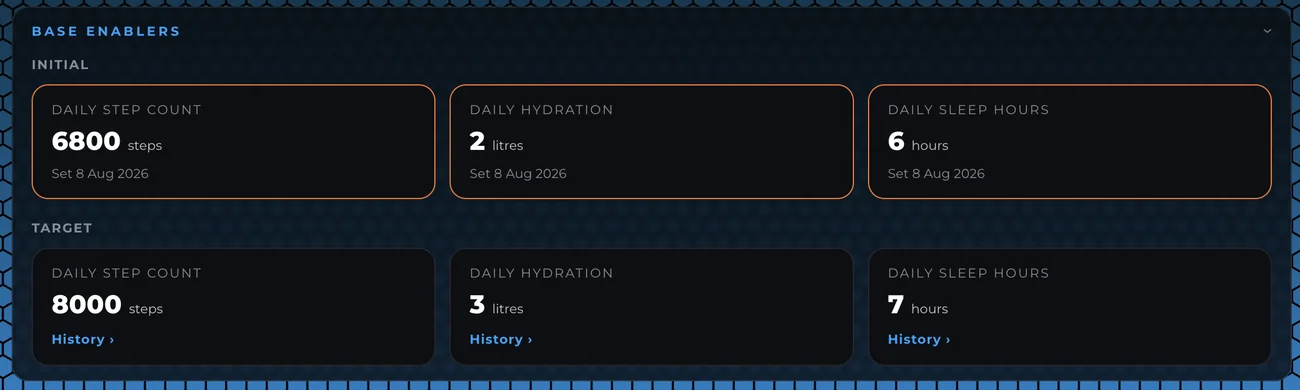
Base Enabler targets showing initial and target values for daily steps, hydration and sleep hours
Initial on the top row, target underneath. Set from where you actually are, not from a generic chart.
Step 06

Testing week.

Before a plan can be written properly, we need to know where you are right now. Not where you were five years ago, and not where you think you should be.

So we run a testing week, built around your goals rather than a standard battery. Depending on what you are chasing that might mean a threshold effort on the bike, a swim test, a run benchmark, and some baseline strength numbers. Cardio and strength both get a look, because most people have a clear idea of one and none at all about the other.

Those numbers become the targets every session is written against, and the benchmark we retest later to prove the work is landing.

If you want a look at the maths behind them, it is the same as our free FTP, CSS and heart rate zone calculators.

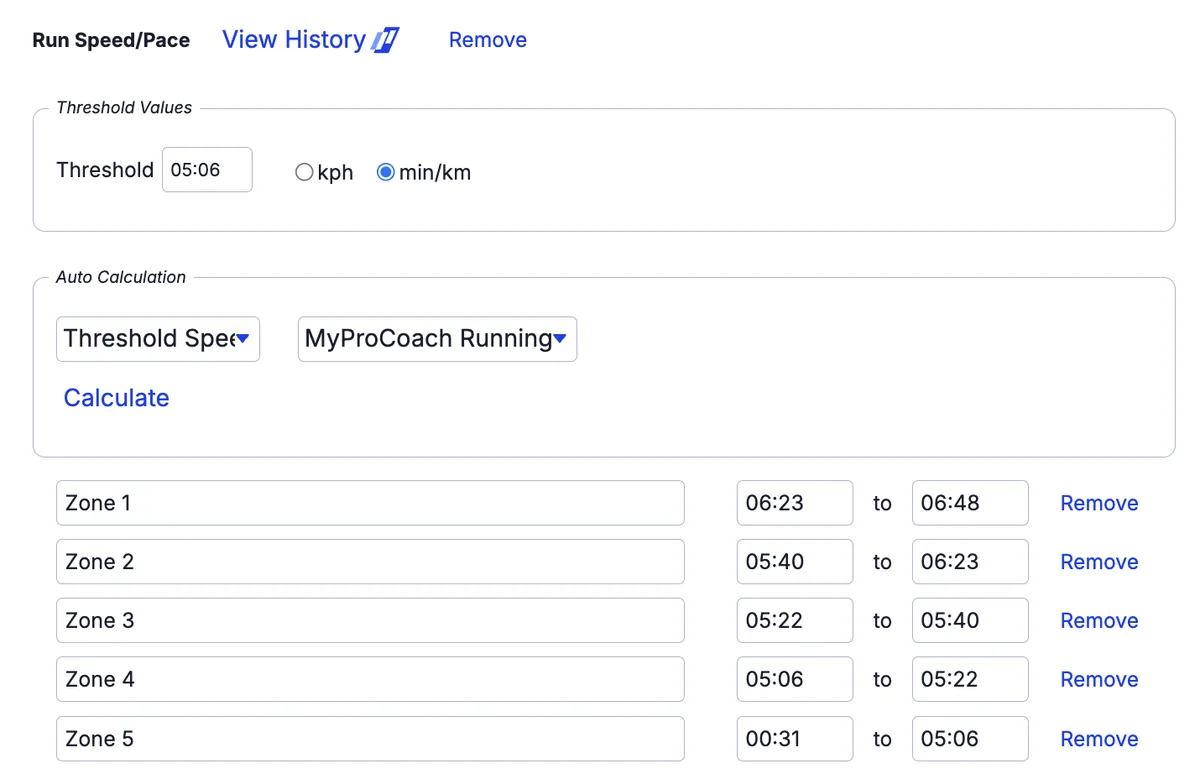
Run threshold pace and the five training zones calculated from it, in TrainingPeaks
A threshold result becomes the zones every session is then written against.
Step 07

Nutrition consultation and strategy.

You sit down with Adam Glover, our nutrition coach, one to one. Not a template, not a macro calculator, an actual conversation about how you eat, how you live and what needs to change.

What comes out of it is a strategy built for your life and the training that is about to land: everyday nutrition first, then fuelling for the work you will be doing. It is deliberately sequenced here, before the programming, so the plan and the food are built to fit each other rather than argued about later.

Adam stays with you throughout. This is not a one-off document, and you will speak to him regularly from here on.

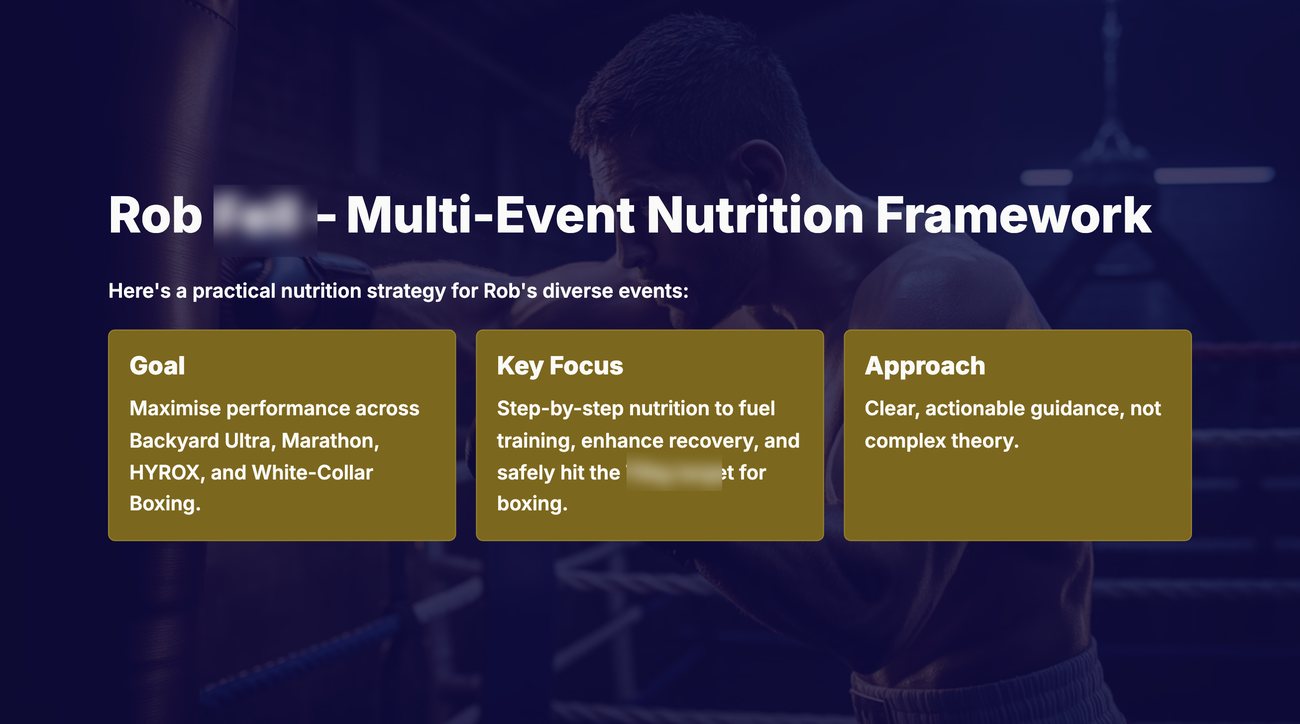
A bespoke multi-event nutrition framework setting out the goal, key focus and approach
A real framework, built around one athlete's events. Name and personal targets removed.
Step 08

Your roadmap gets built.

Now we have everything we need. Where you are right now, from testing week. Where you want to be, from the deep dive and the kick-off call. The roadmap is what connects the two.

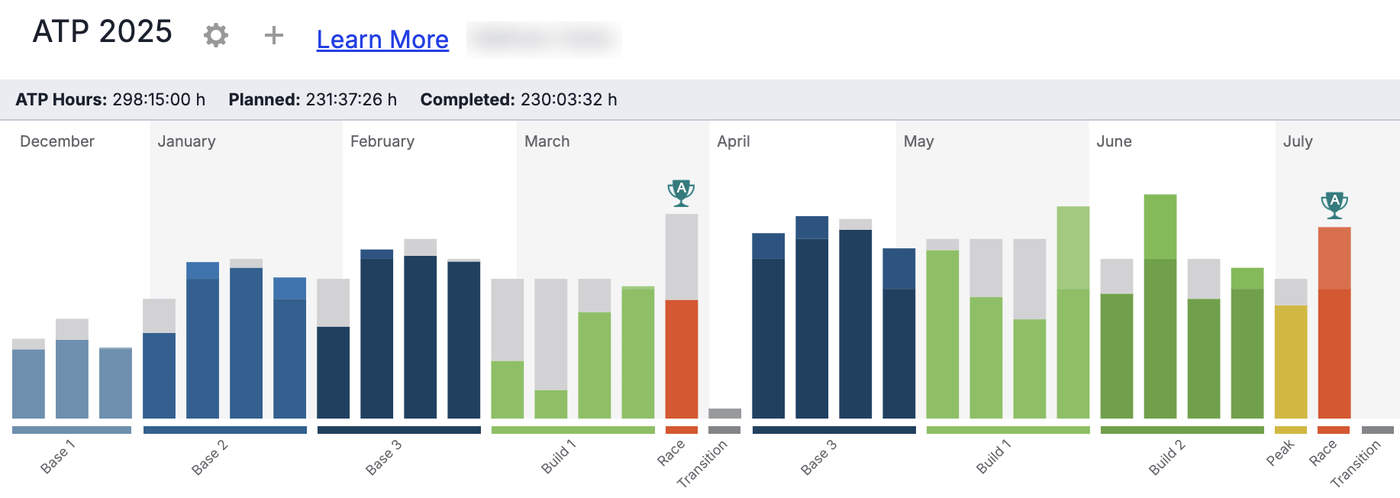
Where it suits your goal, that takes the form of an Annual Training Plan in TrainingPeaks: the year on one screen, working backwards from your target so every week between now and then has a job. Base, build, sharpen, taper, recover. Your B and C races sitting inside those blocks as rehearsals rather than distractions. The deliberately lighter weeks that people skip and then wonder why they stalled.

It has your life in it too. The work trip in March, the holiday in July, the fortnight you already know will be a write-off. A plan that ignores those breaks the first time reality turns up.

This is your chart. It is how you see where you are going, and how far you have already come.
An Annual Training Plan in TrainingPeaks showing a full season of base, build, peak and race blocks
The season on one screen. Base, build, peak, race and transition, with the planned hours against the completed ones.
Step 09

The training starts.

The roadmap sets the shape of the year. The programming is where it becomes something you can actually do on a Tuesday morning.

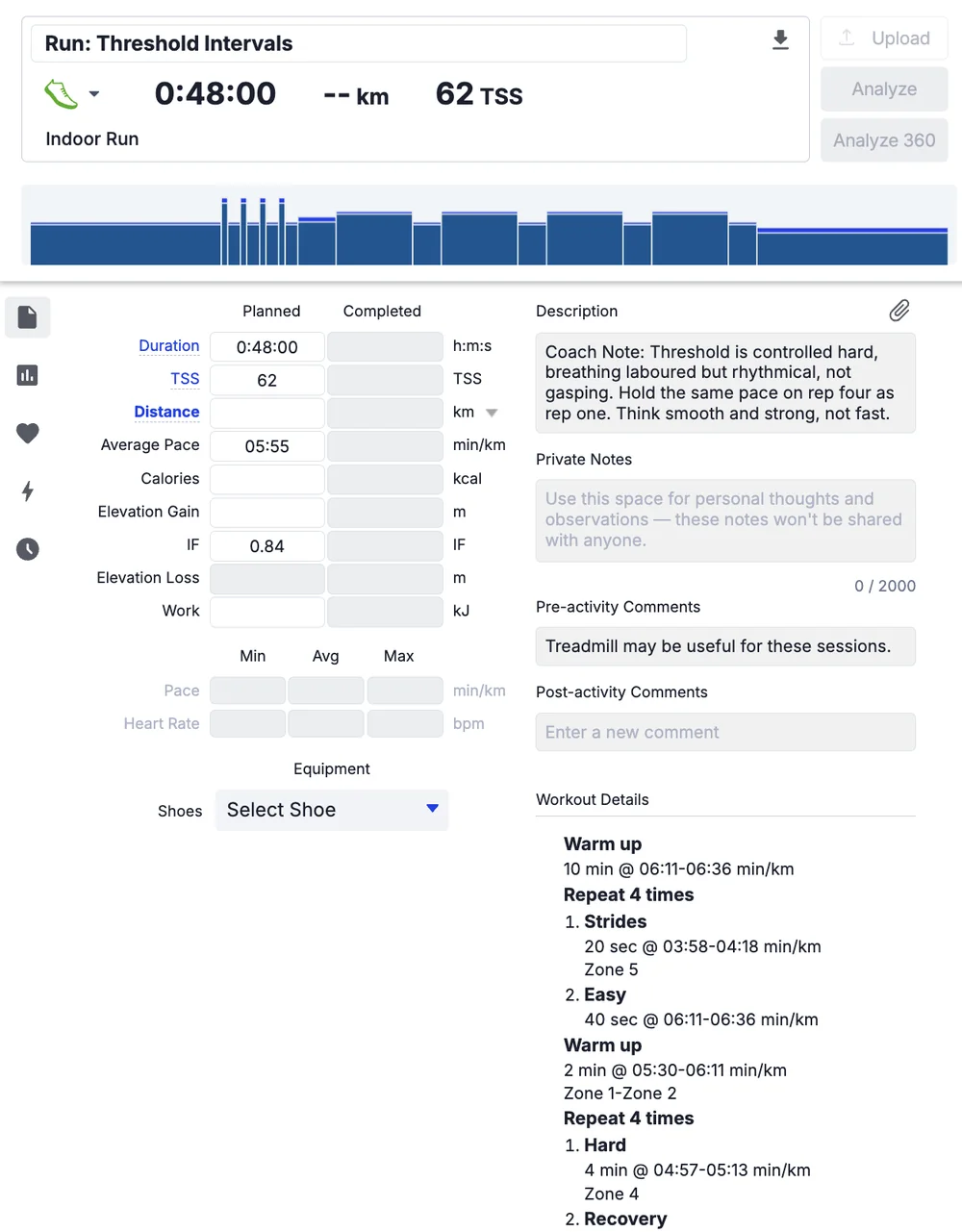
Each session arrives in TrainingPeaks with the structure written out, the targets in whatever you train to, whether that is power, pace, heart rate or effort, and a note explaining what it is for. Not "8 x 400m" on its own, but what it is developing and how it should feel.

Sessions sync to your watch or head unit, so you are not standing in the car park reading a screen. You press start and it tells you what to do.

And that is you set up. From here, the process becomes a rhythm.
A threshold interval run session in TrainingPeaks with its structure, target paces and a coach note
Every session carries its structure, its targets and a note on what it is for.

Running underneath all of it

Your data, doing the quiet work.

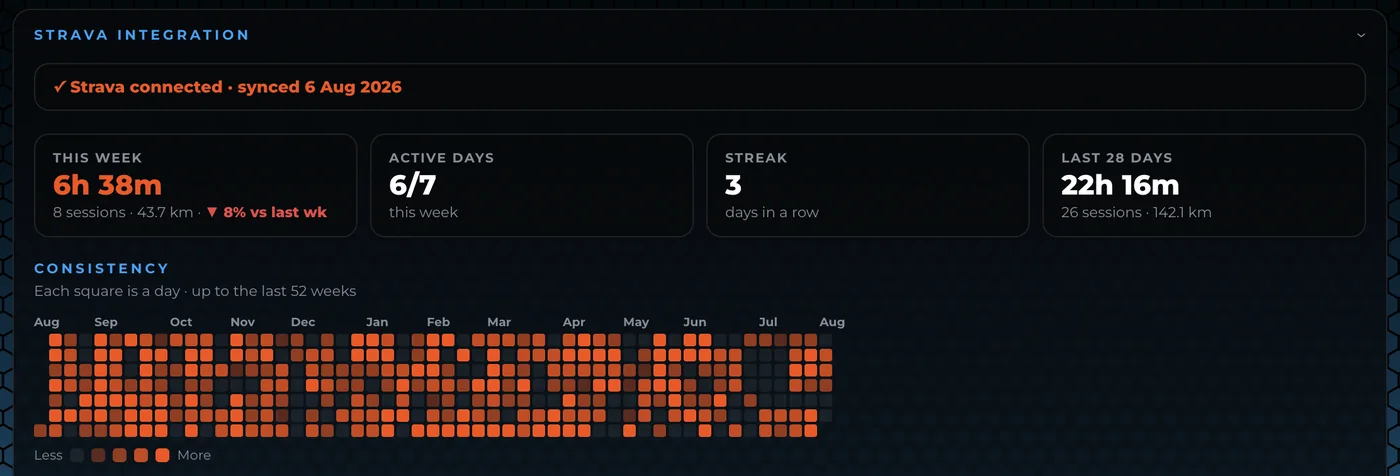
Connect Strava once and every session flows into your dashboard on its own. Nothing to log, nothing to remember.

The Strava integration panel in the dashboard, showing weekly hours, active days, a streak, a 28-day total and a 52-week consistency grid
It shows trends, not snapshots

One session tells us very little. Fifty-two weeks of them tells us a great deal: when your consistency dips, which months you historically lose, how this week really compares to the last one.

It tells us about your life

The pattern in that grid is a picture of your life as much as your training. Work trips, dark evenings, the fortnight the kids were ill. We read it together, so we can understand what happened, and if needed, set in place the fall back routines for when things go amiss.

It changes what I write

Trends drive the programming. If Thursdays never happen, Thursdays change. If you are strongest on a Sunday, that is where the hard work goes. The plan evolves to fit the athlete you are, not the one it assumed.

And then

The bit that actually delivers the result.

Setup is the easy part. What follows is the coaching, and it runs for as long as we work together.

Daily touch points

Session feedback through TrainingPeaks, and WhatsApp for anything personal or for the community. You are never more than a message from an answer.

Unlimited 1:1 access

Calls whenever you need them. Not a monthly slot you have to save your problems up for.

Monthly nutrition consultations

Ongoing one to one with Adam, adjusting as your training load, your body and your life change.

Rehab support when you need it

Access to the rehab team as required, because the fastest way to lose a season is training through something you should have dealt with in week two.

Programming that keeps changing

Ongoing review and adaptation, in line with how you are actually progressing and how the roadmap evolves. The plan is a living thing.

Travel and life support

Work trips, holidays, a hotel gym with two dumbbells and a treadmill. The plan flexes around what you have access to instead of falling apart.

Race build-up support

Pacing strategy for that specific course, a fuelling plan you have rehearsed, and a written race-day brief so you are executing rather than deciding.

Post-race review

What worked, what did not, and what it means for the next block. Then the roadmap gets redrawn, which is how this compounds instead of resetting every January.

Worth repeating

None of this is a checklist you have to complete to be doing it right. It is a process that flexes to you, at whatever pace you need, for as long as you need it.

What matters is not what you get. It is what you achieve.

Apply to join Project Legacy™

Five places a month. Every application read personally.