
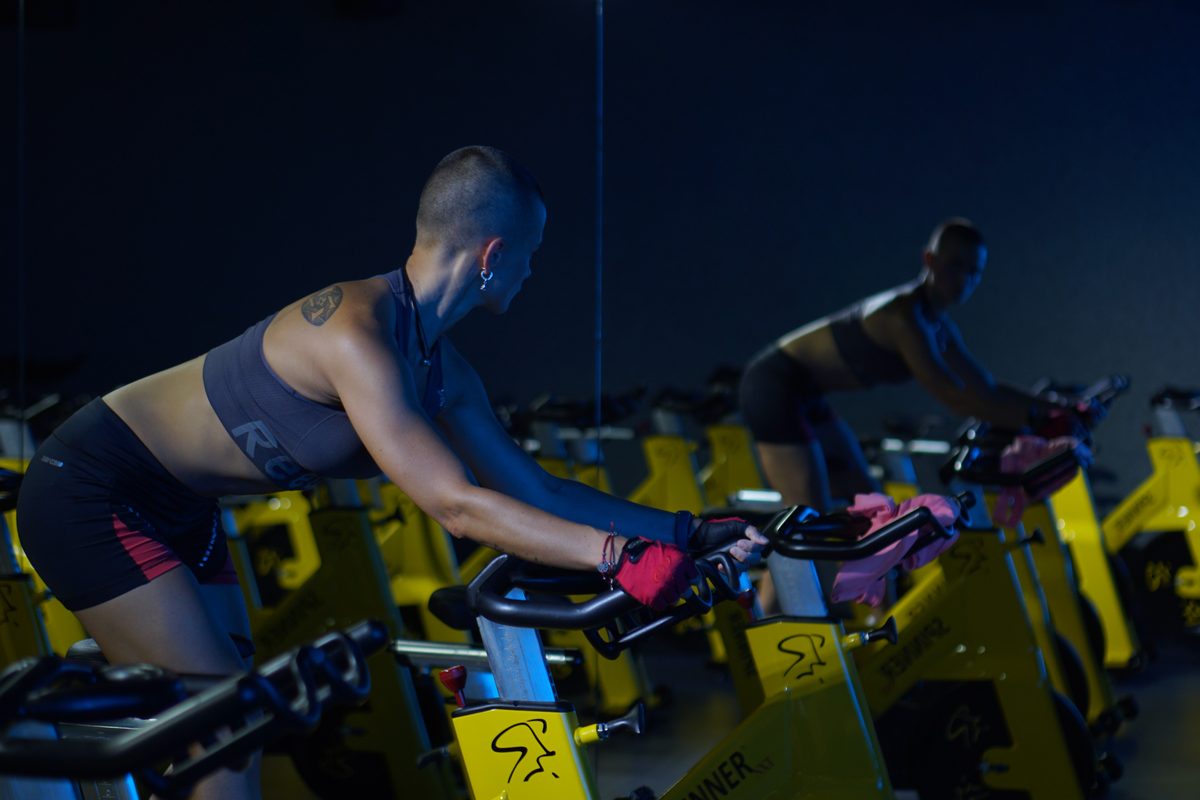
Someone told me recently that they had spent fifteen hundred pounds on a bike and a two-year subscription. Not just a bike. The kind with live classes, instructors, a schedule to turn up to. They were going to ride it every single day. They believed it when they said it, and so did I.
BLUF: Paying up front feels like commitment and works like the opposite, because the money is gone before the behaviour starts. And a class you can join anonymously is not the same as a class that is expecting you. What keeps people going is not access. It is someone noticing.
The first month is real
This is the part people forget when they tell the story afterwards, usually with a bit of embarrassment. The first month genuinely goes well.
The bike arrives, it is a nice bit of kit, and there is a satisfaction in using something you have just spent serious money on. Rides get done. Numbers go up. It feels like the thing has worked.
So when it fades, the conclusion people reach is that something is wrong with them. They lack discipline. They are the problem. That is almost never the right reading of it.
What the money actually bought
Here is the mechanism, and it is worth being precise about it, because it applies to far more than exercise bikes.
When you pay fifteen hundred pounds up front, the cost lands on day one. All of it. From that moment on, the money is spent whether you ride or not. Every subsequent decision to train has to be made on its own merits, in the dark, at half past six on a wet Tuesday, with nothing riding on it except how you happen to feel.
The subscription does not help either. A two-year term you have already committed to is not a recurring reason to show up, it is a recurring reminder that you are not. That is guilt, and guilt is a terrible training partner. It makes people avoid the room the bike is in.
So the sunk cost gives you a burst of motivation that decays, and then it gives you nothing.
"But there are classes"
This is the fair objection, and it deserves a proper answer, because these platforms are not a dumbbell gathering dust. The classes are genuinely well made. The instructors are good at their job. There is a schedule, there are other people riding at the same time, and there is a leaderboard with your name on it.
All of which sounds like the thing I am about to say is missing. It is not quite.
Here is the difference. A live class with three thousand riders in it does not miss you. It runs at exactly the same time, to exactly the same standard, whether you are on the bike or downstairs with a cup of tea. The instructor does not know you exist. Nobody on that leaderboard notices your name is absent, because they were never looking for it.
You can attend, which is real. But you cannot be expected, and being expected is the part that does the work. That is the whole gap between a class you join and a class that is waiting for you.
It is also why the fade is so quiet. Nothing breaks when you stop. No one texts. The schedule carries on without you, which is precisely what makes it so easy to slip out of.
Accountability is not a feeling, it is a person
The word gets used loosely, so let us be clear about what it actually means. Accountability is somebody noticing.
Not an app sending a push notification. Not a streak counter. Not a leaderboard full of strangers. Someone who knows what you said you were going to do, notices when you do not, and asks you about it in a way you cannot swipe away.
That is the thing the equipment cannot supply at any price, and it is the thing that actually determines whether you are still training in March.
What works instead
None of this is an argument for buying nothing, and it is certainly not an argument that the classes are bad. It is an argument for spending some of the money on the part that decays slowest, which is never the hardware or the content library.
- A group session with a fixed time. The time being fixed is most of the value. You are not deciding, you are attending.
- A local gym where they know your face. Being recognised is a surprisingly strong force. Absence becomes visible.
- A club or a community. Other people expecting you is worth more than any amount of equipment sitting in a spare room.
- A coach. Someone whose job is to know what you are doing, why, and what to change when it stops working.
What all four have in common is that they keep costing you something. Not necessarily money. Attention, presence, the mild social weight of having said you would be there. That is not a flaw in the arrangement. That is the whole product.
The bit people are actually missing
Information has not been the bottleneck for a long time. You can generate a perfectly good training plan in seconds, for free, and the platform on that bike will happily give you one.
The challenge is implementation. A plan that is flawless on paper is worth nothing the moment real life gets involved, because work gets chaotic, sleep suffers, motivation dips and something in your back starts complaining. At that point the plan does not need more content. It needs judgement, and it needs adjusting to the person trying to follow it.
That is the gap. Not knowledge, not equipment, and not a catalogue of excellent classes. Somebody who understands how you think, what overwhelms you, and what version of the process actually fits your life, and who is still there in week nine when the novelty has gone.
If the bike is already in the spare room
Then keep it. This is not an argument for writing it off, and the money is spent either way.
What it needs is the layer it never came with. Pick your classes for the week in advance and put them in the diary at fixed times, rather than leaving it to whoever you happen to be at half six. Tell somebody what you have committed to. Join one thing where a human being will notice you are missing. Use the bike as part of a plan that somebody is watching, rather than as the plan itself.
The bike was never the problem, and neither were the classes. They were just never going to be the whole solution on their own.
The bottom line
People do not stop because they are weak. They stop because nothing in the arrangement made continuing any easier than quitting, and quitting is quieter.
Buy the thing that notices. Everything else is access, and access has never been the bit people were short of.
If you want the first practical step, work out when you could realistically train with our free weekly training planner. And if you have started and stopped before, this one explains why.