So, firstly I would say this... the way you talk to yourself about training matters more than most people realise. There's a big difference between "I've got to get this done" and "I get to do this". One reluctantly drags you through. The other spurs you on.
BLUF: If training feels like a chore, the problem is often the pressure and the framing, not the training itself. Remove the pressure, change the language, and consistency looks after itself.
A little story first
Back in 2014, for reasons I'll go into another time, I entered two full distance (Ironman) triathlons: Outlaw and Ironman Wales.
When I crossed the Outlaw line in July, I was elated. Also broken. I vowed there and then that I would not do Wales. Come September, there I was again, digging deep to get round.
I can't say I enjoyed those races. At all. But something got lit that I didn't recognise at the time.
Honestly, I wasn't a triathlete. I was someone who did triathlon. All the gear, little idea. For a couple of years I kept showing up at events, and for a while I wasn't bad. But I certainly wasn't good.
The commute that changed everything
Then I got a posting to the Ministry of Defence HQ in central London, and was living in Kingston-upon-Thames. That gave me a commuter's choice:
- 15 min walk, 30 min train, 15 min walk: 60 minutes.
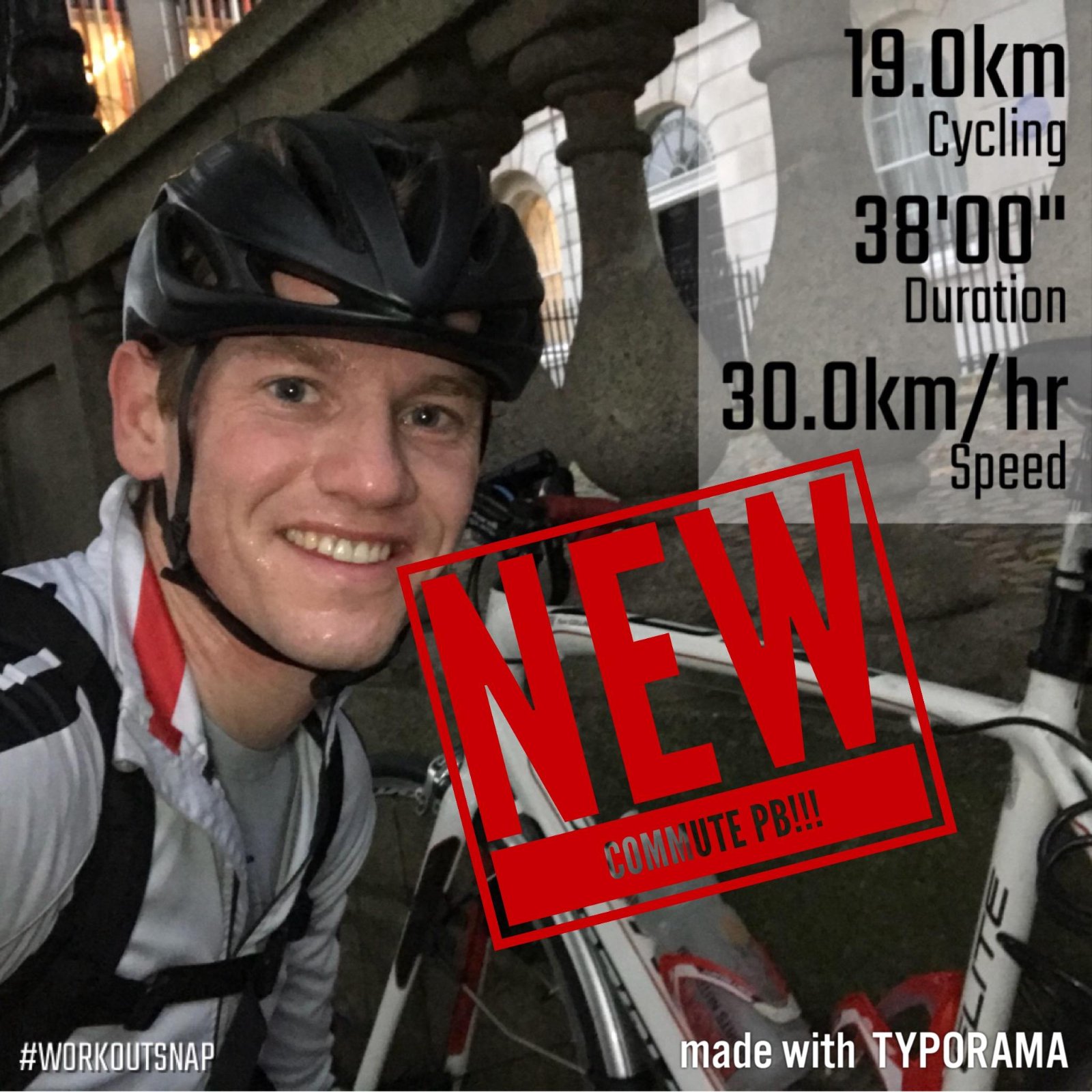
- An 18 to 21km bike ride, with time to shower and change: 60 minutes.
I picked door number two. And the game changed.
Here's the thing. I still didn't love triathlon. But I'd fallen in love with being active. I was dragging myself through sessions, sure, but you know what they say... fake it until you make it. And it turns out I got much fitter (no sh*t, right). That, I loved.
Because the role was intense, there was no time for entering races. So I just cruised the streets of London, every day, with no pressure to perform. That is, until I started trying to beat my own commute times.
And a magical thing happened. I started to absolutely love it.
Cycling every weekday turned into thundering round Richmond Park at the weekend. The occasional run into work (yes, 21km before the office) turned into more running, then home along the river for 30 to 35km. I was in my element. I'd never done so much exercise, and the best part was that it wasn't a chore.
I didn't have to "get it done". I felt extraordinarily lucky that I got to do it.
So what actually changed?
I didn't get more disciplined overnight. I didn't find some new well of motivation. Two things shifted, and they're both worth stealing.
First, the pressure came off. No race on the calendar meant no performance to chase. I wasn't training for anything, so I couldn't fail at it. Ironically, that's when I did the most training of my life.
Second, the activity was built into my day, not bolted on top. I wasn't finding time to train. Training was the commute. It was the thing I was going to do anyway, just done differently.
So, what that means is: the change wasn't really about mindset tricks. It was about design. The mindset followed the situation, not the other way round.
Why "got to" quietly kills consistency
"Got to get it done" frames training as a debt. Something you owe. And debts feel heavy.
When it's a debt, missing a session feels like failing. Guilt creeps in. And guilt, as I've said before, is one of the fastest ways to kill consistency. You skip one, feel rubbish, skip another, and now you've talked yourself into a hole.
"Get to do it" reframes the same session as a privilege. You have a body that works. You have an hour. You get to move. That's not toxic positivity, it's just a truer way of looking at it. Plenty of people would give a lot to be able to do what you're calling a chore.
There's decent evidence that the language and reasons behind why we do something matter for whether we stick with it. Self-determination theory, which has a good body of research behind it, suggests we keep going with things we find genuinely rewarding far more than things we feel forced into. You can read a plain overview of it here. I'll be honest, it's not a magic switch, but the direction of travel is clear enough.
How to make the shift yourself
Alright, so here's what to do. None of this is complicated, and that's the point.
- Take the pressure off first. If every session is judged against a big goal, it'll feel like a test you might fail. Give yourself a stretch where the only aim is to show up and move. No pace targets. No performance.
- Build it into your day, not on top of it. Can you cycle to work? Run part of the commute? Walk the school run and add a loop? The sessions you don't have to "find time" for are the ones that survive a busy week.
- Compete with yourself, gently. Once you're enjoying it, a small personal target adds spark. My commute times did that for me. Not a plan, just a bit of fun.
- Catch the language. When you hear "I've got to train", swap it for "I get to train". Small thing. Try it for a week and see how it lands.
- Let one thing lead to the next. The commute became park rides, which became runs, which became a whole year of racing. You don't need to plan all of that. You just need to enjoy where you are enough to want a bit more.
The key takeaway
That first year in London solidified a love for fitness I couldn't have dreamed of. By 2019 I'd taken on what I dubbed My Hardest Year: triathlons, ultramarathons, obstacle course racing, long cycles, everything I could find to test this new passion. I raced in the UK and the USA and simply couldn't get enough.
None of that came from forcing it. It came from removing the pressure and letting the enjoyment build.
So, the key message here is this: you don't have to love it on day one. You just have to remove enough pressure to keep showing up, and let the love catch up with you. Because better to be consistently good, than sporadically great.
If you have any questions, queries or concerns about how to build this into your own week, don't sit on them, let me know.