
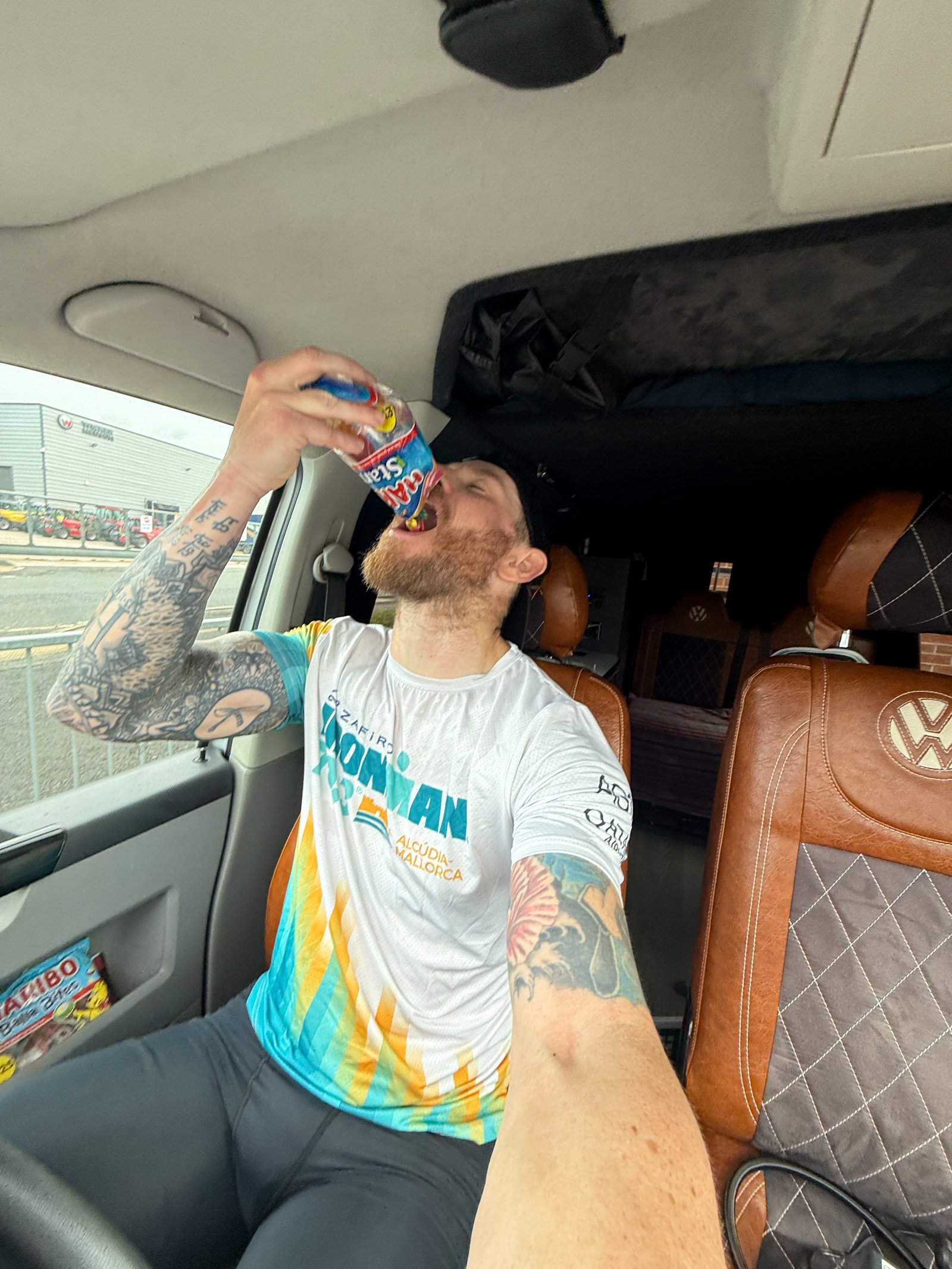
There are nearly always sweets hidden somewhere in the van. Glovebox, door pocket, that gap between the seats where things go to die. It is not glamorous, and it is not part of some carefully engineered performance strategy. But it might be one of the more useful habits I have picked up.
BLUF: Plan your fuelling properly, but keep a simple source of fast carbohydrate within reach for the sessions where timing, preparation or your own judgement does not go to plan.
How the sweets get there in the first place
So, firstly, they do not start life as training fuel. They usually arrive during a long journey. You stop for petrol, you grab a bag of something, you eat half of it and the rest lives in the van forever.
And because the van gets used for everything (trail running, biking, all sorts of training) they just stay there. Nobody takes them out. Over time you end up with a small, slightly melted, entirely reliable emergency supply.
That is the honest origin story: Not a lab. Not a finely crafted nutrition strategy... . A service station.
The moment you will recognise
Here is where it gets useful. When you train a fair bit, at some point (more often than is comfortable) you will misjudge your fuelling.
You went out fasted because you were short on time. Or you planned a 90-minute ride and it became two and a half hours. Or you told yourself you did not need a gel for "just a steady one" and then it stopped being steady.
The signs tend to build in a familiar order:
- Legs feel heavier than the effort should warrant.
- Your pace or power quietly drops and you cannot hold on.
- You go a bit vague, lightheaded, irritable.
- And then the craving. Your body starts demanding sweet, fast sugar, and it is not asking politely.
That is your body running low on readily available carbohydrate. Not the end of the world, but not somewhere you want to be a long way from the van.
What is actually going on
Your body stores carbohydrate as glycogen in the muscles and liver, and it uses that store to fuel harder or longer efforts. Those stores are limited. When they run low and you have not topped up, performance drops and you feel it.
The British Nutrition Foundation has a plain, non-hyped overview of how carbohydrate fuels exercise if you want the detail: Nutrition for sport and exercise.
The key message here is simple. For most endurance sessions, the fix is fast-acting carbohydrate. Sweets happen to be fast-acting carbohydrate. That is genuinely all this is.
Sweets are a backup, not a plan
Now, to be clear, this is not me telling you a bag of jelly sweets is a fuelling strategy. I mean it is... but maybe not entirely.
A proper plan means fuelling before and during the sessions that need it, using something you have practised, in amounts you have tested. Gels, drinks, real food, whatever sits well with your stomach. That is the work.
The sweets are the safety net for when the plan and reality part ways. And they will part ways, because life is busy and no session goes perfectly every time.
Better to be consistently good than sporadically great applies to fuelling too. A rough plan you actually follow beats a perfect one you keep abandoning.
What to keep in the van (and on you)
Here is what to do. Keep a small, accessible stash of quick carbohydrate somewhere you will always find it, and carry a little on longer sessions.
Options that work well:
- Sweets or jelly-type sweets. Cheap, fast, and they do not need water. Just check they sit alright with your gut before you rely on them.
- A spare gel. Chuck one extra in the glovebox and one in your pack. You will forget the day you need it most.
- Rice-crispy squares or similar. Easy on the stomach, easy to eat on the move.
- A carbohydrate drink mix. Handy for longer rides where you are drinking anyway.
Try this: next time you finish a long journey, do not clear the van out completely. Leave the sweets. Consider it stock control.
The bit that actually matters
So, what does this mean beyond the joke?
Two things. First, take fuelling seriously enough to plan it, because under-fuelling makes good sessions feel awful and turns some athletes off training altogether. If every long run feels like a slog, it may be your fuelling, not your fitness.
Second, do not pretend every session will go to plan. It will not. The people who stay consistent are usually the ones who prepare for things going slightly wrong, not the ones who assume everything will go right.
A small, accessible source of fast carbohydrate covers a surprising number of "it all went a bit sideways" moments. And that keeps you moving forward instead of walking home lightheaded, promising yourself you will fuel properly next time.
A quick note on doing this well
If you are training for something meaningful (a half, a full, a Hyrox, an ultra) fuelling becomes a skill worth practising, not an afterthought. Test it in training. Find what your stomach tolerates. Know roughly how much carbohydrate you need per hour for longer efforts, and rehearse it so race day is not the first time you try it.
Every Team TC athlete works with our nutritionist for exactly this reason. Not because it is complicated, but because getting the basics right removes a whole category of problems, and that is where I would spend your attention.
The moral of the story, then. Plan your fuelling, practise it, and keep some emergency sweets in the van. I know, hard-hitting, value-adding advice right there. But the useful bit is underneath the joke: prepare for the perfect session, and quietly plan for the one that is not.
If you have any questions, queries or concerns about your fuelling, don't sit on them, let us know.