
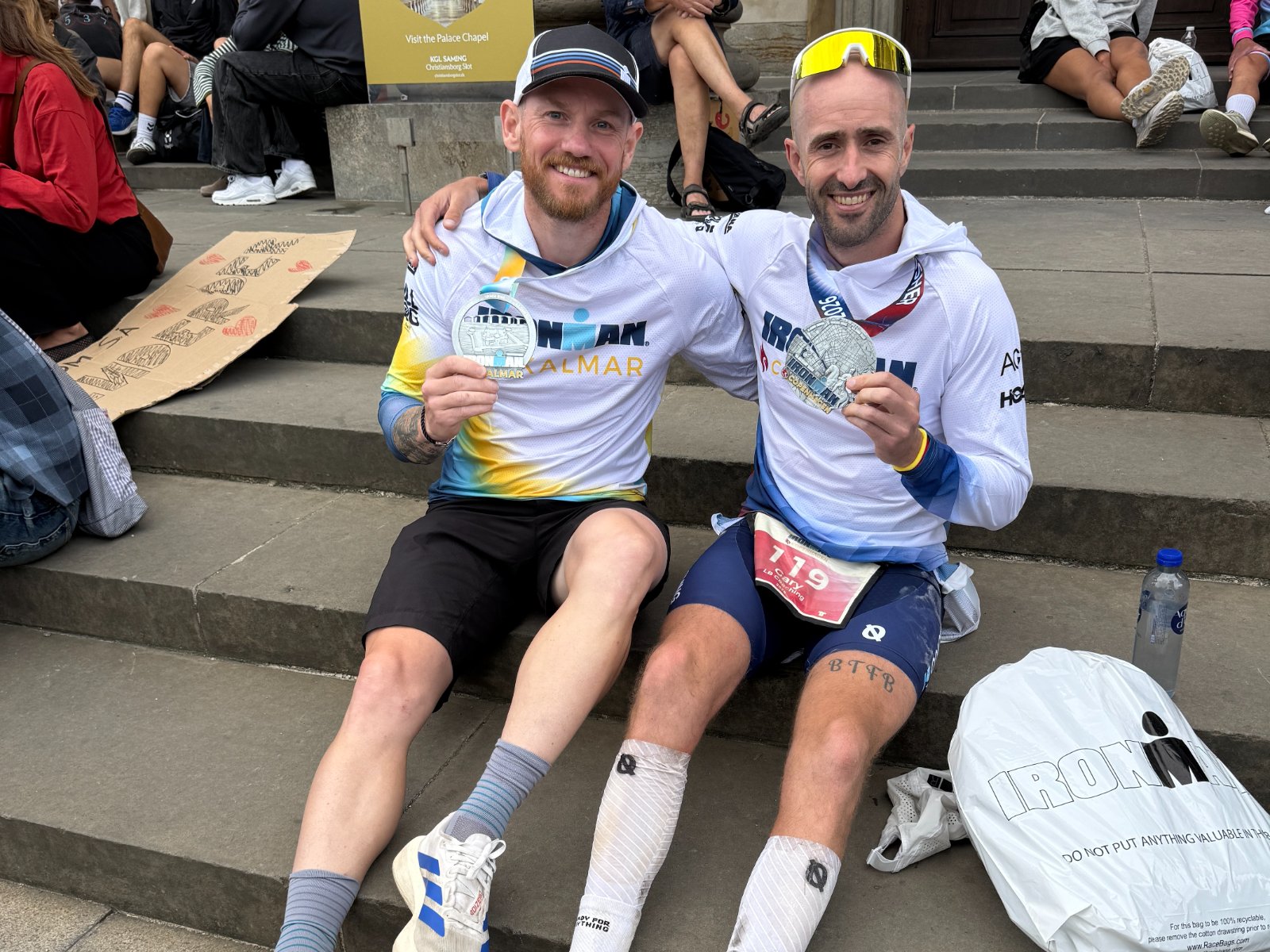
Coaching usually gets framed as a race thing. You book an event, you panic a bit, you hire someone to get you to race day in one piece. Fair enough. But here is something I think more honestly: even if I never toed another start line, I would still keep a coach in my corner.
BLUF: You do not need a race on the calendar to justify having a coach. A clear plan, a reason that matters to you, and someone who notices whether the work happens will serve a long-term health goal just as well as a performance one.
Why I would still do it
The reason is not really about motivation. It is about who I want to be later.
I already have a picture of the man I want to be at 52, 62, 72 and beyond. Active. Energetic. Capable. Still doing hard things with purpose. And, to be blunt about it, I do not want my son having to look after me because I let my body decline to the point where I cannot look after myself.
That is the real goal. Not a finish line. Independence.
So, firstly I would say this: the best way I know of giving that future a decent chance is to keep training. To stay active, year on year, without long gaps where everything slides. And the best way I know of actually doing that, consistently, is to have structure, purpose and an external accountability force in my life.
A long-term goal does not have to be a race
As we all know, a race is useful. It creates urgency. There is a date, you cannot move it, and that pulls the work forward. But urgency is not the same as meaning.
A long-term goal might just be to remain strong enough to join in. To carry your own bags. To get off the floor without planning it. To keep up with your kids, and later your grandkids. To stay the person who says yes to the walk, the climb, the daft challenge, rather than the one who waves everyone off.
That is a goal worth having. It is just quieter than a start line, and it does not come with a confirmation email, so it is easier to let it drift.
The key message here is: your long-term health deserves the same deliberate support you would happily arrange for a half marathon. We do not think twice about hiring help for a twelve-week push. The thirty-year version somehow gets left to chance.
Where the value actually comes from
When I say a coach, I do not mean someone standing over you shouting. I mean three things working together.
- Structure. A clear plan removes the daily negotiation. You are not standing in the kitchen at 6am deciding what to do, whether today counts, how far, how hard. The thinking is already done. You just do the session.
- Purpose. The training stays connected to the person you are trying to become, even when there is nothing to train for. That is what keeps it going in the flat months. Not excitement. Direction.
- External accountability. Someone else notices. They see when you have gone quiet, they challenge the drift, and they stay invested when your own motivation dips. Because it will dip. Everyone has weeks where getting out the door feels like a lot.
That last one does the heavy lifting. We all have moments where the gym, the run, the swim just feel like too much to start. When there is someone in your corner who has seen your plan and expects to see the work, you are simply more inclined to go. You have spent the time and effort choosing that person. You do not want to let the whole thing slide, and you do not want to let them down either.
There is some decent evidence behind this, not just vibes. Research on accountability has found that people who make a specific commitment to another person, rather than just to themselves, are considerably more likely to follow through. The American Society of Training and Development reported that having an accountability appointment with someone lifted goal completion sharply compared with a private intention. You can read a summary of that work in the American Psychological Association's research on goal pursuit. The simple version: motivation is unreliable, and structure plus another human is a sturdier bet.
What I am not claiming
I want to be honest here, because this is easy to oversell. I am not saying everyone needs a coach forever. I am not saying a coach guarantees you a fit, independent old age, because nobody can promise that. Genetics, luck and health all have a say.
What I am saying is narrower, and I think truer: if you have decided the person you want to be in a decade matters, then it deserves the same deliberate support you would give a short-term goal without blinking. That is all.
Better to be consistently good than sporadically great. That holds whether you are chasing a time or just trying to still be moving well at seventy.
How to start without a race
So, what that means is you can build this now, with nothing booked. Here is what to do:
- Name the future version of you. Not a weight, not a pace. A description. "Still hillwalking at 65." "Able to pick my grandkids up." Make it a person, not a number.
- Turn it into this week. Three or four sessions that a reasonable version of that person would do. Keep it boring and repeatable.
- Add one external check. A coach, a training partner, a standing appointment. Someone who notices when you do not show.
- Review, do not restart. When a week goes sideways, and it will, you take the next best step. You do not bin the whole plan.
A structured plan does something quietly powerful. When you are given one and you stick to it, you stop hoping you are progressing and start knowing it. That confidence compounds. It is the difference between wishing you were the kind of person who trains, and simply being them.
You do not have to have a great start, but you do have to start, to be great. And you do not need a race to do it. You just need to know who you are training for. In my case, that is a man twenty years down the line who can still look after himself, and a son who never has to.
If you have any questions, queries or concerns about any of this, don't sit on them, let me know.