
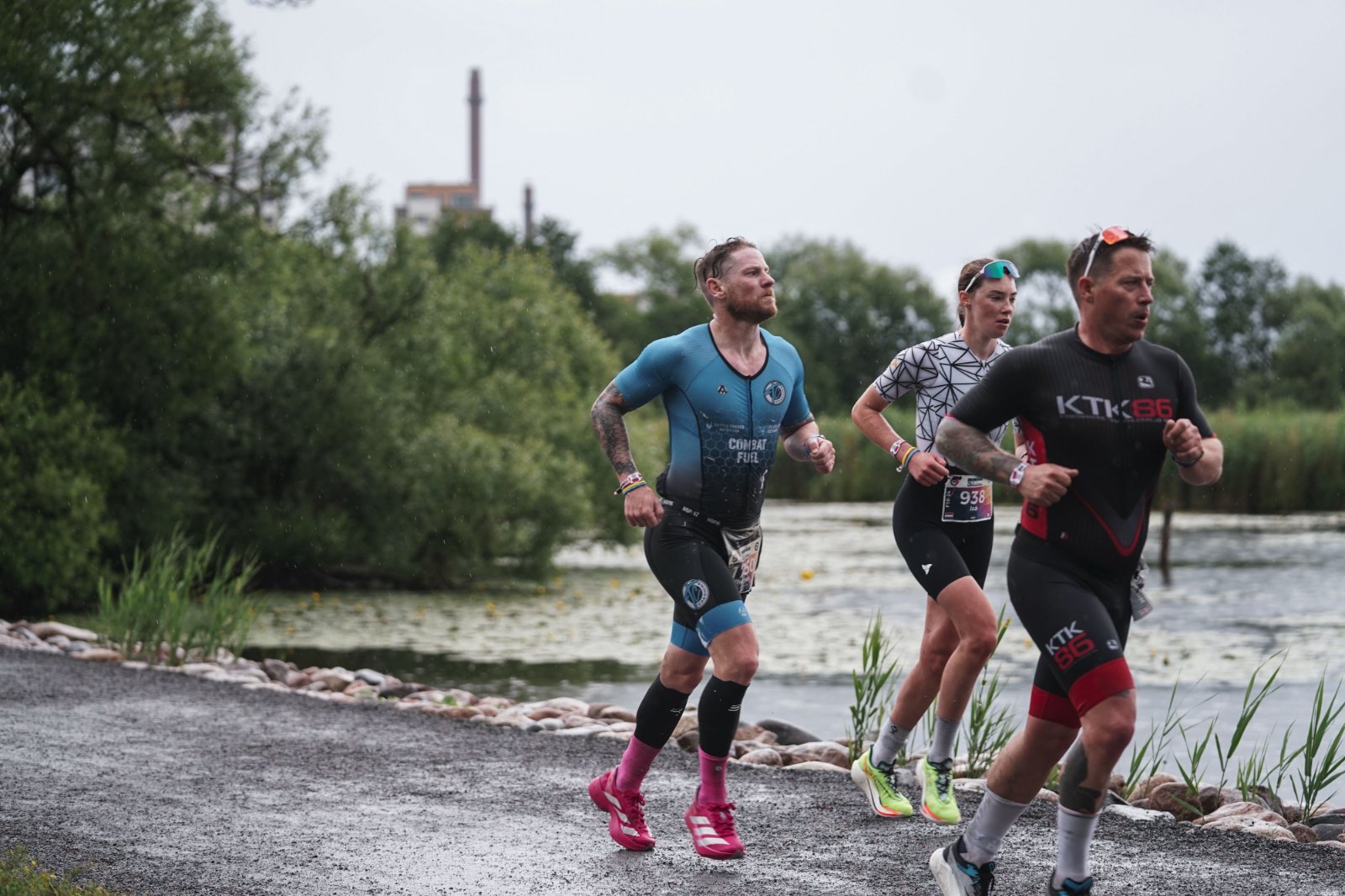
So, firstly I would say this is one of the most common misunderstandings I come across. People sign up for coaching because, deep down, they think it means race day will not hurt. As if a plan, a coach and proper programming somehow buy you a comfortable morning at the sharp end.
BLUF: Coaching does not remove the hurt. It prepares you to earn a kind of hurt you can be proud of.
Where the myth comes from
It is an easy assumption to make. You do the training, you tick the sessions, you turn up fit. Surely that means the race feels easier?
And in one sense, yes. Being fit means a given effort feels more manageable than it would if you had not prepared.
But that is not usually how people experience race day. Because if you are prepared, you do not use that fitness to cruise. You use it to go faster, to hold on longer, to push into places you could not reach before.
So the effort still hurts. It just hurts at a higher level of performance.
Proper coaching can make it hurt more
Here is the bit people do not expect: if anything, good coaching makes race day hurt more, not less.
Because now you are fit enough, confident enough and prepared enough to actually test yourself. You are not surviving. You are competing with the version of yourself you have built over months of work.
And let me be clear about what that pain is. It is not the physical hurt of being underprepared, of your legs giving out because you skipped the long sessions.
It is the deeper discomfort of pushing hard and getting the absolute most out of yourself. That is more painful than grovelling round undercooked. Anyone who has done both knows the difference.
So, what that means is: coaching does not save you from the fight. It qualifies you to be in it.
Two kinds of hurt
There are really two versions of a hard race, and they feel nothing alike afterwards.
- The underprepared hurt. You are walking the back end. You are surviving. You knew, honestly, that you had not given yourself the best chance. The suffering is real, but it has no purpose behind it.
- The prepared hurt. You are hurting because you are genuinely on the limit. You are making brave decisions. You are staying in it when everything is telling you to ease off. The suffering is the point.
The key message here is: the goal was never to avoid the difficulty. The goal is to be prepared enough to meet it properly.
Why this matters for how you feel afterwards
Think about when you look back on a race. Days later, weeks later. What is it you actually value about the experience?
It is rarely the split times. It is the moment you wanted to stop and did not. The bit where it got ugly and you kept moving forward anyway.
That is the achievement. And that only exists because it was hard and you chose to keep going.
There is very little pride in knowing you could have prepared better. Speaking for myself, I do not find any sense of achievement in a performance where I know I did not give it my best. It would sit badly with me. That is a personal thing, but I suspect a lot of you feel the same when you are honest about it.
Type 2 fun is a different animal when you gave everything
You will have heard of type 2 fun: the sort that is miserable in the moment and brilliant in hindsight.
But there is a version of type 2 fun that is far better than the rest. It is the one you get after you have pushed hard and earned the result, not the one you get after you have grovelled through because you were not ready.
Both are painful on the day. Only one leaves you proud.
That distinction is worth sitting with, because it changes what you are actually training for. You are not training to remove the pain. You are training to deserve the good kind.
So what does coaching actually do?
If it does not make race day easier, what are you paying for? Fair question. Here is what proper coaching gives you:
- The fitness to push properly. You cannot go to a hard place if your body is not ready to go there. Structured training builds the engine that lets you spend big without blowing up early.
- The confidence to trust it. Knowing you did the work quietens the doubt. That way, when it gets hard, you are less likely to talk yourself out of the effort.
- Pacing and decision-making. Preparation is not just physical. It is knowing when to hold, when to commit and how to read your own body under stress.
- A performance you can stand behind. The whole point is to give yourself the best chance to find out what you are capable of. Not to be comfortable. To be capable.
As we all know, to get something you have never had, you need to do something you have never done. Coaching does not shortcut that. It prepares you for it.
Reframe the goal before you start line up
So, before your next event, change the expectation.
Do not turn up hoping it will not hurt. That hope will only leave you disappointed or, worse, holding back.
Try this instead: turn up expecting it to be hard, and decide in advance that you are going to meet that difficulty well. Push hard. Stay in the fight. Make decisions your future self will respect.
Because here is the thing about your why. If, when you look back, what you value is that you pushed hard through the difficult moments and kept going, then that is your why. To meet the hard stuff and keep moving forward.
Get comfortable being uncomfortable, because that is where the growth is. A plastic garden might be a nice place to sit, but nothing ever grows there.
The key takeaway is simple: coaching does not make race day hurt less. It makes you good enough to hurt for a reason, and proud of how you handled it.
If you have any questions, queries or concerns about how to prepare properly for your next race, don't sit on them, let me know.