
"Is it normal to be this nervous about the swim?" tends to get asked quietly, usually right at the end of a conversation. The answer is yes, and it is worth saying plainly.
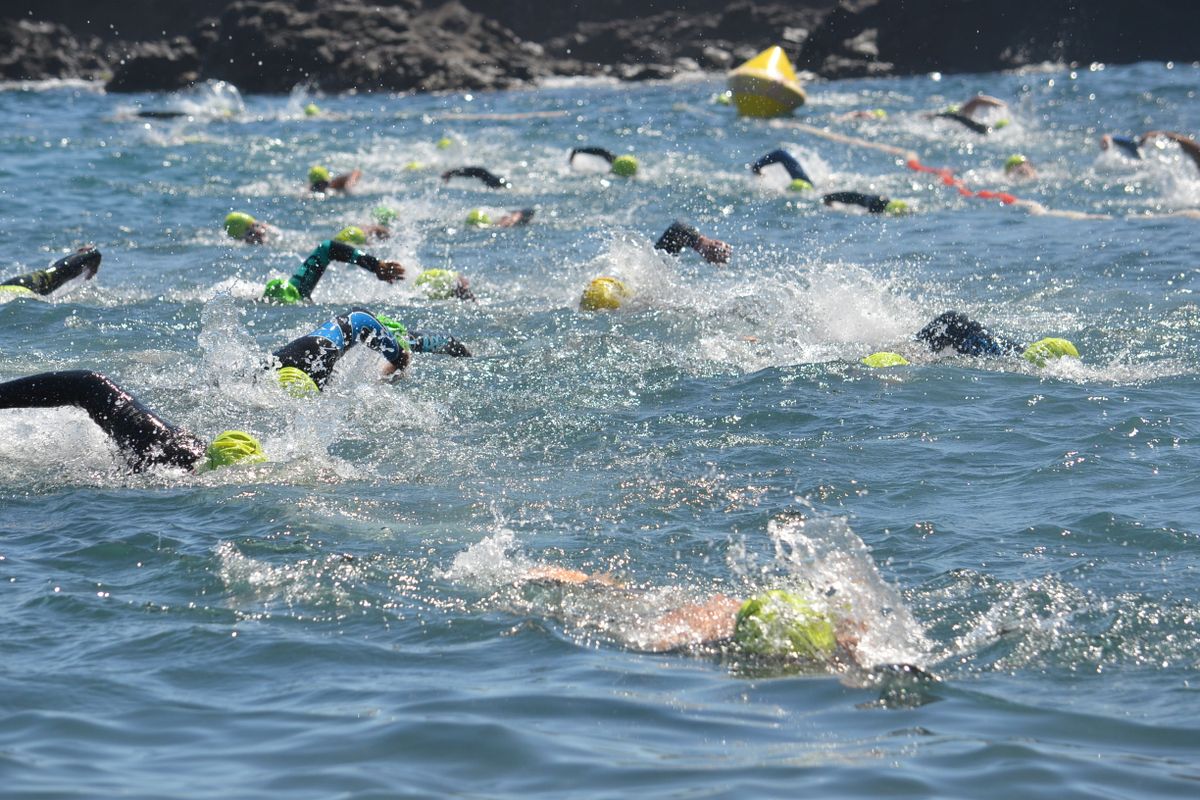
If the thought of a mass swim start makes your chest tighten, you are not being soft and you are not unusual. You are in the majority.
I have had strong swimmers, people who grew up in pools, tell me the first open water start was the most uncomfortable ten minutes of their sporting life. Everyone feels like this at some point.
BLUF: open water anxiety is a skills problem dressed up as a courage problem. Skills can be trained.
Why open water feels so different
It is worth understanding what your body is reacting to, because most of it is physiology rather than fear.
- Cold water shock. Cold on the face and chest triggers a gasp reflex and rapid breathing. It peaks in the first minute or two, then settles.
- No black line, no wall. Nothing to follow, nothing to hold on to, and often nothing to see.
- The wetsuit. Buoyant and warm, yes, but tight around the chest until you are used to it. That tightness feels a lot like panic.
- Other people. Contact, splash and the sense of being boxed in.
So, what that means is: your body is responding sensibly to unfamiliar input. The fix is to make it familiar.
The things that actually help
Here's what to do:
- Get in open water before race day. More than once. This is the single biggest one. Even three or four sessions changes everything. A supervised lake session or a local tri club swim is ideal.
- Practise the first two minutes deliberately. Get in, put your face in, breathe out slowly, let the gasp reflex pass. Then start swimming. Knowing it settles is what stops it becoming panic.
- Splash your face and neck before the start. It blunts the cold shock response so the first strokes are less of a jolt.
- Learn to sight. Eyes up every six to eight strokes, just enough to see the buoy, then back down. Practise it in the pool so it is automatic.
- Swim wide, or start at the back. Nobody is handing out medals for a good first 100m. Give yourself clear water and swim your own race.
- Have a reset. If it goes wrong, roll onto your back, breathe, float. Wetsuits mean you cannot sink. Kayakers are there for exactly this. Taking twenty seconds is not failure.
Build the swim fitness underneath it
Confidence in the water comes partly from technique and partly from knowing you have the fitness to cover the distance comfortably.
Try this: work out your CSS, which is your sustainable swim threshold pace, using our CSS Calculator. It takes two time trials, and from there every swim session has a purpose instead of being lengths for the sake of lengths.
That being said, do not chase pace at the expense of comfort. For a first 70.3, being calm and steady in the water is worth far more than being three minutes quicker.
Know what you are turning up to
A lot of race-morning nerves are simply the unknown. Sea, lake, river or dock all feel different. So does a rolling start versus a mass start.
Every one of our race guides tells you the venue, the swim type, the distance and whether wetsuits are likely, so you can picture the day properly rather than imagining the worst version of it.
For example: a sheltered dock swim in Swansea and a two-loop sea swim off Tenby ask quite different things of you. Knowing which one you have entered changes how you prepare.
On race morning
Keep it simple.
- Get in for a warm-up swim if the race allows it. Two minutes of easy swimming is worth an hour of worrying.
- Start toward the back or the outside.
- First 100m: long, slow breathing. Let everyone else sprint off.
- Find a rhythm, then start racing once your breathing has settled.
The key message here is: your race does not begin properly until you are out of the water. Get through the swim calm and you have done your job.
The bottom line
The fear is normal, and it is not a sign you are unprepared. It is a sign you are doing something that matters to you.
Get in open water a handful of times, learn to sight, know that the cold shock settles, and give yourself permission to start slowly. Then it becomes what it should be: the strange, brilliant bit at the start of a great day.
To get something you have never had, you need to do something you have never done.
If the swim is the bit keeping you from entering, don't sit on it, let me know.