
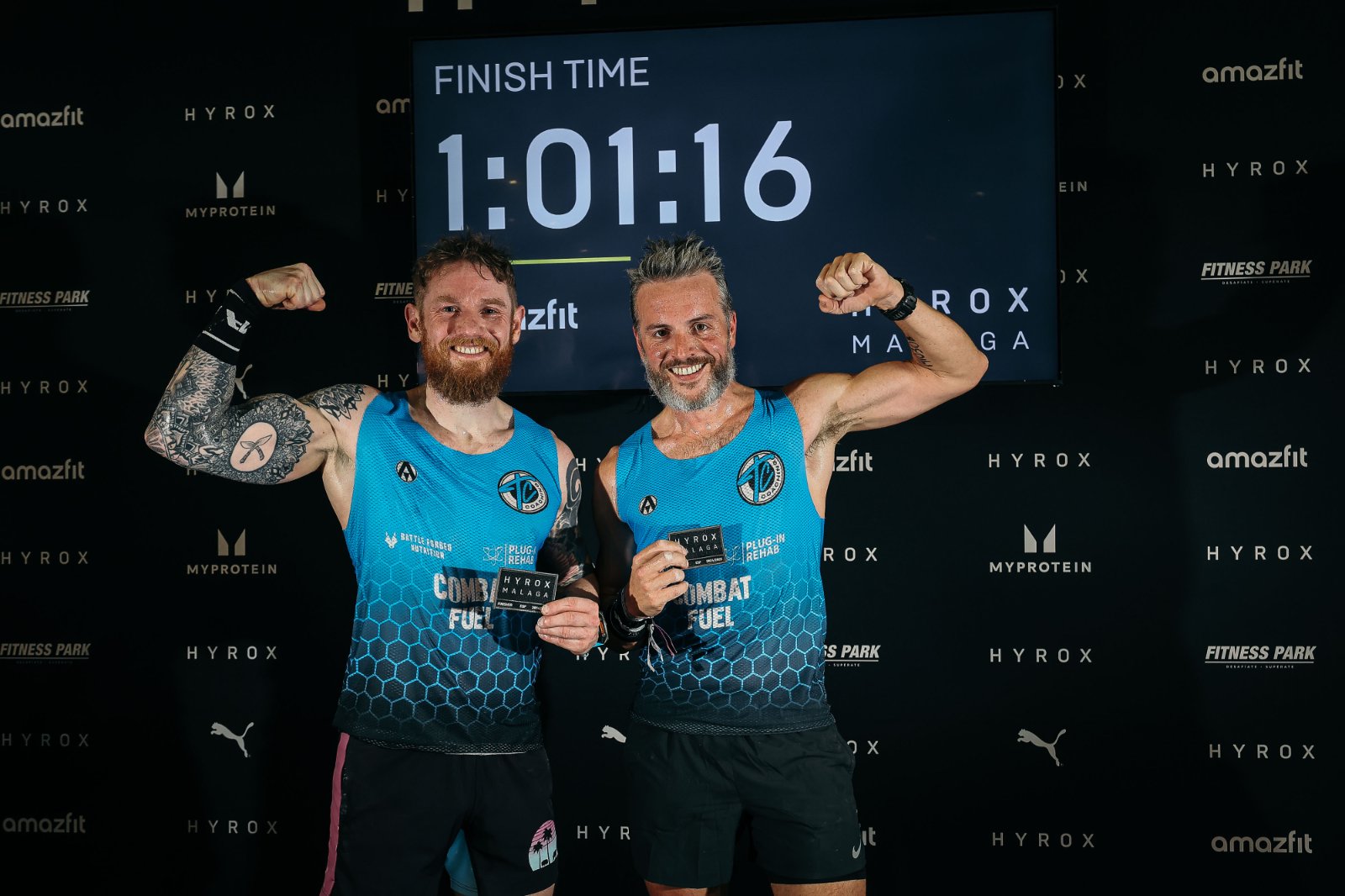
You signed up. Maybe you paid the entry fee in a moment of confidence, and now the doubt has crept in. "Who do I think I am? I can't do this." If that is where you are, you are not broken. You are exactly where most people are.
BLUF: Nerves and imposter syndrome are a normal response to going after something you have never done. You do not think your way out of them, you build evidence you can do it.
Why you feel like this
So, firstly I would say this: those thoughts are showing up because you are chasing something you have never achieved. That is it.
You are trying to do a thing you have not done before. Of course it feels uncertain. Of course part of you asks what right you have to be here.
That is not weakness. That is a completely normal reaction to standing at the edge of something bigger than your current experience.
And it does not matter which event it is. Your first 5k. Your first 10k. A half marathon, a marathon, an ultra, a first Hyrox, a half Ironman or a full-distance Ironman. If you have never done it, you are going to feel it.
The same goes for performance. You might have covered the distance before, but now you are going after a faster time or a better result. New target, same feeling. The doubt comes back because, once again, you are reaching past what you have already proven.
The trap to avoid
Here is where a lot of people get stuck. They wait to feel ready before they commit properly. They assume the nerves are a sign they have bitten off too much.
That being said, if you deal in extremes, you talk yourself out of things before you have even started. And the guilt that comes with that? It kills consistency before you have built any.
So let me offer a reframe. The nerves are not proof you should not be doing this. They are proof you are doing something that matters to you. Something with a bit of jeopardy in it. Something worth the effort.
As I like to say: a plastic garden might be a nice place to live, but nothing ever grows there.
The only real fix: build a body of evidence
You cannot argue yourself calm. You can tell yourself "I can do this" all day, but if there is no evidence behind it, part of you will not believe it.
So, what that means is you stop trying to win the argument in your head and start stacking proof instead.
Every session you complete is a data point. Every week you show up is a data point. The doubt gets quieter not because you convinced it, but because you gave it less to argue with.
Here's what to do:
- Zoom in. Do not focus on the Ironman, the marathon, the finish line. Focus on the next session. Say yes to right now. If you tried to hold the whole journey in your head at once, you would be too overwhelmed to start.
- Log the wins. Keep a note, on your phone, on paper, wherever, of what you actually did each week. On the days the doubt is loud, read it back. That is your evidence file.
- Track small progress. The run that used to leave you gasping now feels steadier. The distance that felt impossible last month is normal now. That shift is the point.
- Expect wobbles. Self-sabotage happens, but so does self-care. A bad week does not erase the good ones. Keep moving forward.
Because better to be consistently good, than sporadically great. The evidence is built by the boring, repeatable stuff, not by one heroic session.
Get someone in your corner
Now, a big part of the overwhelm is not really about the distance. It is about not knowing what you are doing.
You do not yet know if you have the capability, the knowledge, the plan to get from where you are to that start line. That uncertainty is fertile ground for imposter syndrome. When you do not have a map, every step feels like a guess.
So, what that means is one of the most useful things you can do is get an expert alongside you. Someone who has stood where you want to stand. Someone who knows how to get you to that start line, prepared and confident.
That is not me selling you something. It is why I have a coach myself.
I am not chasing distances I have never done. I have done Ironmans, ultras, Hyrox in the pro division. But I am going after results I have never got before. And for that, I want someone in my corner I trust, who steers me along the right path, who holds me accountable, who brings the expertise I do not have on tap myself. For me, that is Gaz.
The point is this: a coach shortens the gap between doubt and evidence. Instead of guessing whether your training is working, you have someone telling you it is, and adjusting it when it is not. That certainty does a lot of the heavy lifting on the days you feel like a fraud.
What good support looks like
You do not have to work with me to feel this benefit. But whether it is a coach, a training partner or a community, look for these things:
- Accountability. Someone who notices when you go quiet. Accountability is the bridge between motivation and discipline, and motivation will not always turn up.
- Expertise you trust. Someone who has actually done the thing, or coached people through it, not just read about it.
- Perspective. Someone outside your own head who can tell you, honestly, that you are further along than you think.
Find your people. Surround yourself with those who want you to win. On the days you cannot see your own progress, they will see it for you.
The key takeaway
The nerves are normal. The imposter syndrome is normal. The "I can't do this" is normal. None of it means you have made a mistake, and none of it means you are not the kind of person who does this. It just means you have not done it yet.
To get something you have never had, you need to do something you have never done. And the way you quieten the doubt is not clever self-talk, it is evidence, stacked one session at a time, ideally with someone knowledgeable in your corner.
You do not have to have a great start. But you do have to start, to be great.
If you have any questions, queries or concerns about the event you have signed up for, don't sit on them, let me know. And keep an eye out for Part 2, where we handle the nerves in the final week and on race day itself.