
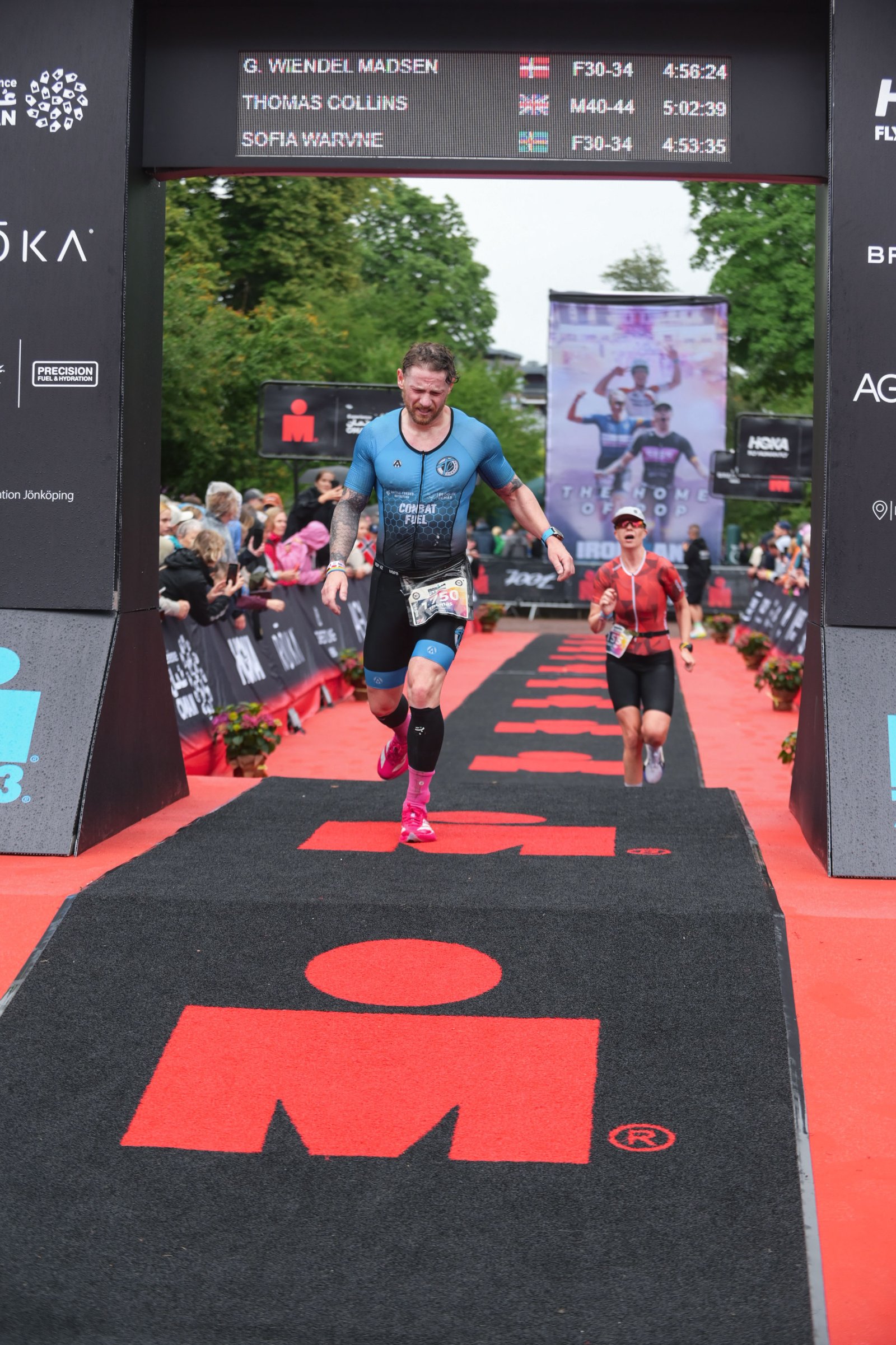
Most people never see the total. You buy a 70.3 one piece at a time: the wetsuit in January, the bike in March, the entry fee whenever it pops up, the hotel the week before. It never feels like one big number. So let's add it up.
BLUF: It costs around £2,562 to race a 70.3 the sensible way, and around £7,038 if you go for the shiny version. Most people spend nothing on the one thing that actually determines the result.
How we worked this out
These are mid-range UK prices for 2025/26. Not budget, not premium. The realistic spend for most age-groupers lining up at a UK Ironman 70.3 (Bolton, Weymouth, Staffordshire and the like).
Two columns throughout. Average is sensible kit that does the job. Premium is what a lot of people actually end up buying, because once you're in the triathlon world, you start to believe the gear will make you faster.
Prices move, and you'll find deals and second-hand bargains. Treat these as ballpark, not gospel.
The gear, item by item
Here's where the money goes. Average first, premium after.
- Tri suit: £130 average (Zone3, HUUB, Tri-Fit) to £225 premium (HUUB Anemoi, Castelli).
- Wetsuit: £200 average (mid-tier Orca, Zone3, HUUB) to £600 premium (Orca Alpha, Zone3 Vanquish).
- Goggles: £30 average (Zoggs Predator, Arena Cobra) to £80 premium (ROKA, Magic5).
- Bike helmet: £80 average (solid road lid: Giro, Lazer) to £300 premium (aero: Kask Bambino, Giro Aerohead).
- Sunglasses: £90 average (SunGod, entry Oakley) to £190 premium (Oakley Sphaera, 100% Hypercraft).
- Socks: £12 average to £18 premium (Compressport, Castelli Aero).
- Bike shoes: £120 average (mid-range Shimano, Lake) to £325 premium (S-Phyre, S-Works Ares).
- Bike: £900 average (decent alloy road bike: Giant Contend, Specialized Allez) to £4,500 premium (carbon TT bike: Canyon Speedmax, Cervélo P-Series).
- Number belt: £10 average to £12 premium.
- Running shoes: £120 average (mid-range daily trainer) to £265 premium (carbon super shoes: Vaporfly, Metaspeed).
So, the gear alone. Around £1,692 average. Around £6,515 premium. The bike is doing most of the heavy lifting on that gap, which is exactly where most people spend the extra.
Entry and accommodation
Then there's the stuff you can't avoid.
Race entry for a standard UK Ironman 70.3 sits in the region of £320 to £370 depending on when you enter and which event. Enter late and it climbs. For our maths we'll use £350, and it's the same figure in both columns.
Accommodation for race weekend is two nights near the venue. Mid-range UK hotel, race-weekend prices (which are never cheap because the whole field needs a bed). Call it £260 for the two nights, the same in both columns.
That's £610 that has nothing to do with gear and everything to do with simply showing up.
The two totals
Stack it all up:
- Average: around £2,562.
- Premium: around £7,038.
And remember, that's the sensible end at £2,562. A decent road bike. A mid-range wetsuit. Normal kit. The premium version is what a lot of people actually spend, piece by piece, over a season or two, telling themselves each purchase is the one that makes the difference.
A quick, honest caveat: some of this is reusable. The wetsuit and the bike last for years, so the per-race cost drops if you keep racing. But for your first 70.3, this is the number you're looking at to get to the start line.
The thing nobody budgets for
Here's what I'd gently point out. Whether it's £2,562 or £7,038, none of it addresses what actually determines the result.
Not the finish time. Not whether you cross the line knowing you gave it everything, or knowing you left something out there on the bike because your preparation didn't hold up.
That part comes down to the training. The structure. The pacing. The nutrition. And for most people, that's the one line on the list they spend £0 on.
A free plan copied off the internet. Nutrition they wing on the day. A long swim they keep meaning to do. Hoping for the best over 70.3 miles is a brave strategy when you've already spent four grand on the bike.
So where does coaching sit?
I'm not going to dress this up as neutral advice, because I'm a coach, and you should read it with that in mind. But look at the maths.
You've invested up to £7,038 in the experience. Coaching, for a block leading into a race like this, is a fraction of that. It's the part that decides whether all the rest was worth it.
The carbon bike doesn't pace you. The super shoes don't tell you to back off at mile 60 of the ride so you can actually run. The aero helmet doesn't practise your race-day fuelling for twelve weeks so your stomach holds up. That's all preparation, and preparation is the cheapest, most overlooked line on the whole list.
So, here's the question, and I'll let you answer it. You've invested in the experience. Are you going to invest in the result?
I'm not trying to sell you a bike you don't need or scare you off the start line. Quite the opposite. A 70.3 is one of the most rewarding things you can take on, and it's worth doing properly. Just know where the money is really needed, and it isn't always where you think.
If you've got a 70.3 in mind and you're weighing up how to prepare for it, don't sit on the questions, let me know. We'll work out the sensible way forward together.