
So, firstly… the biggest predictor of running success is boringly simple. It is consistency. Keep running, keep showing up, and over time you get better. The problem is that the thing which drives progress is also the easiest thing to destroy.
BLUF: Running consistency is what makes you better, but strength is what lets your body tolerate the frequency and volume without injury or burnout. Even one purposeful session a week is a good place to start.
Consistency drives progress, and frequency drives consistency
Let's start with what actually works. Runners who improve tend to run often. Frequency lets you spread your training across the week, which usually means you can handle more useful volume without any single session flattening you.
That sounds easy enough. Just run more. More often, more volume, and I'll get better.
And to a point, that is true. But it is a fine line.
Because the biggest destroyer of consistency is injury and burnout. And that is exactly what you get when you run too much, too soon, without a body that can handle the repeated impact.
So you end up in a tricky balance. Enough running to stimulate progress, but not so much that you cannot recover or stay consistent. That is what makes running challenging, and honestly, what makes it rewarding when you get it right.
Goldilocks
The sweet spot is not too much, not too little… just enough. Coaches sometimes call this the Goldilocks zone, and finding it is a big part of what an objective eye is for.
Left to our own devices, most of us swing between extremes. We do too little, get frustrated, then pile on volume in a burst of motivation, break down, and lose weeks. That stop-start pattern is the opposite of what drives progress.
The key message here is this: injury does not just cost you a week. It destroys the consistency that creates the progress in the first place.
So the goal is not to run as much as humanly possible. The goal is to run as much as your body can absorb, session after session, week after week. And that is where strength comes in.
Why strength is the missing piece
Running places enormous demands on the body. Every stride is an impact your muscles, tendons and joints have to control and repay. Do that for thousands of steps, several times a week, and you need a body built to take it.
Strength training builds that resilience. It prepares the tissues for repeated load, it improves how well you tolerate volume, and it gives you a buffer against the small breakdowns that turn into missed sessions.
The research points the same way. A well-known systematic review and meta-analysis by Lauersen and colleagues in the British Journal of Sports Medicine found that strength training reduced overuse injuries markedly more than stretching did (Lauersen et al., 2014). There is also good evidence that strength work improves running economy, meaning you use less energy at a given pace, without adding unwanted bulk (Blagrove et al., 2018).
So strength is not separate from running performance. It is part of what makes consistent running possible, and it can make you a more efficient runner too.
Where most runners go wrong
For the vast majority of people I coach, strength is the thing that has been neglected. So when I set training priorities, it is usually where I start.
Most newer runners fall into one of two camps.
- They ignore strength entirely, because they are not sure what to do, so they just run more and hope for the best.
- Or they head to the gym and default to the classic bodybuilding compound movements, without much thought about why.
Now, I am not one to tell you a particular exercise is off limits. Compound lifts absolutely have their place. But they would do well with some purpose and specificity behind them.
The question is not "is this a good exercise". The question is "does this help me tolerate the demands of running". Train with that filter and things get clearer very quickly.
What to actually do
Here's what to do. You do not need to live in the gym. For a runner, strength is a support act, not the main event.
Start with one session a week and build from there. Focus on the areas that carry you when you run.
- Lower-limb strength. Squats, deadlift variations, calf raises, hip and glute work. These are the engines and shock absorbers of running.
- Single-leg work. You run on one leg at a time, so train it that way. Split squats, step-ups, single-leg calf raises and single-leg deadlifts build the balance and control that flat, two-legged gym work misses.
- Low-level plyometrics. Simple hops, skips and pogos, done well and progressed sensibly. These teach your tendons to store and return energy, which is exactly what running asks of them. Start low and build the volume slowly.
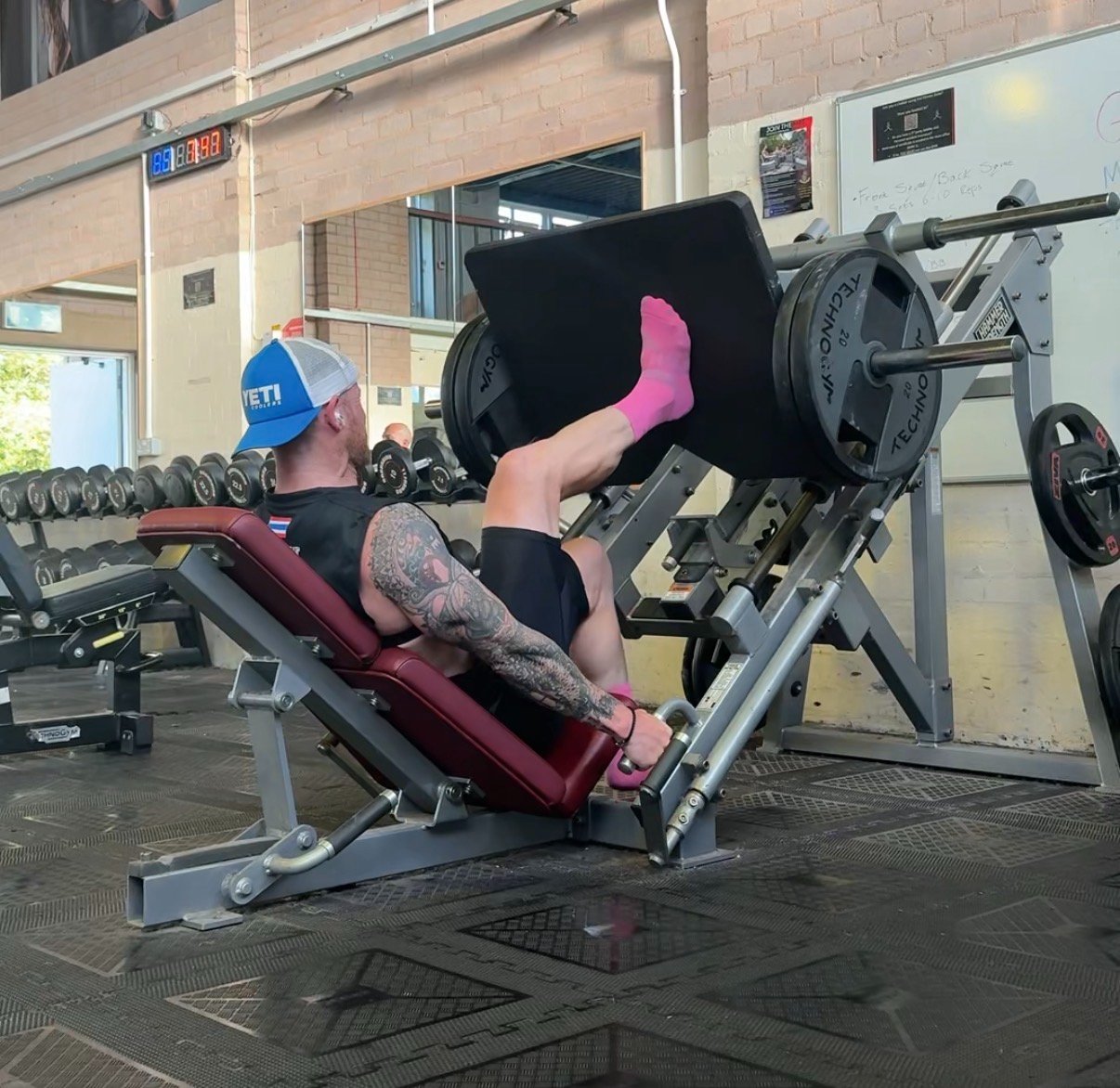
And here is the part that surprises people: do not be afraid to build the weight up and go heavy.
There is a myth that runners should only ever do endless light, high-rep circuits. But lifting in lower rep ranges with challenging load is a very effective way to build strength and tendon resilience without adding much size. Runners can lift heavy too, and many probably should. Sensibly loaded and progressed, of course.
How to fit it in without breaking your running
So, what that means in practice is a bit of common sense around placement.
- Put your harder strength sessions on the same day as harder runs, or on a day away from your key running sessions, so you protect the quality of both.
- Start light enough to nail the movement, then add load gradually. To get something you have never had, you need to do something you have never done, but you build to it, you do not leap to it.
- Expect some stiffness early on. That settles as your body adapts. Sharp pain is different, and if that shows up, it is a conversation, not a reason to push through.
Better to be consistently good than sporadically great. One well-chosen strength session every week, done for months, beats a heroic gym block that you abandon after a fortnight.
The takeaway
Running more is not always the answer. More resilience often is.
Consistency and frequency drive your progress, but they only work if your body can keep taking the load. Strength is what buys you that. It is what lets you run more often, absorb more volume, and stay in the game long enough for consistency to do its job.
So if you want to increase your resilience to injury, start with one strength session a week. Lower limb, single-leg work, low-level plyometrics, and do not shy away from building the weight up over time.
Remember, runners can lift heavy too.
If you have any questions, queries or concerns about where strength fits into your running, don't sit on them, let me know.