
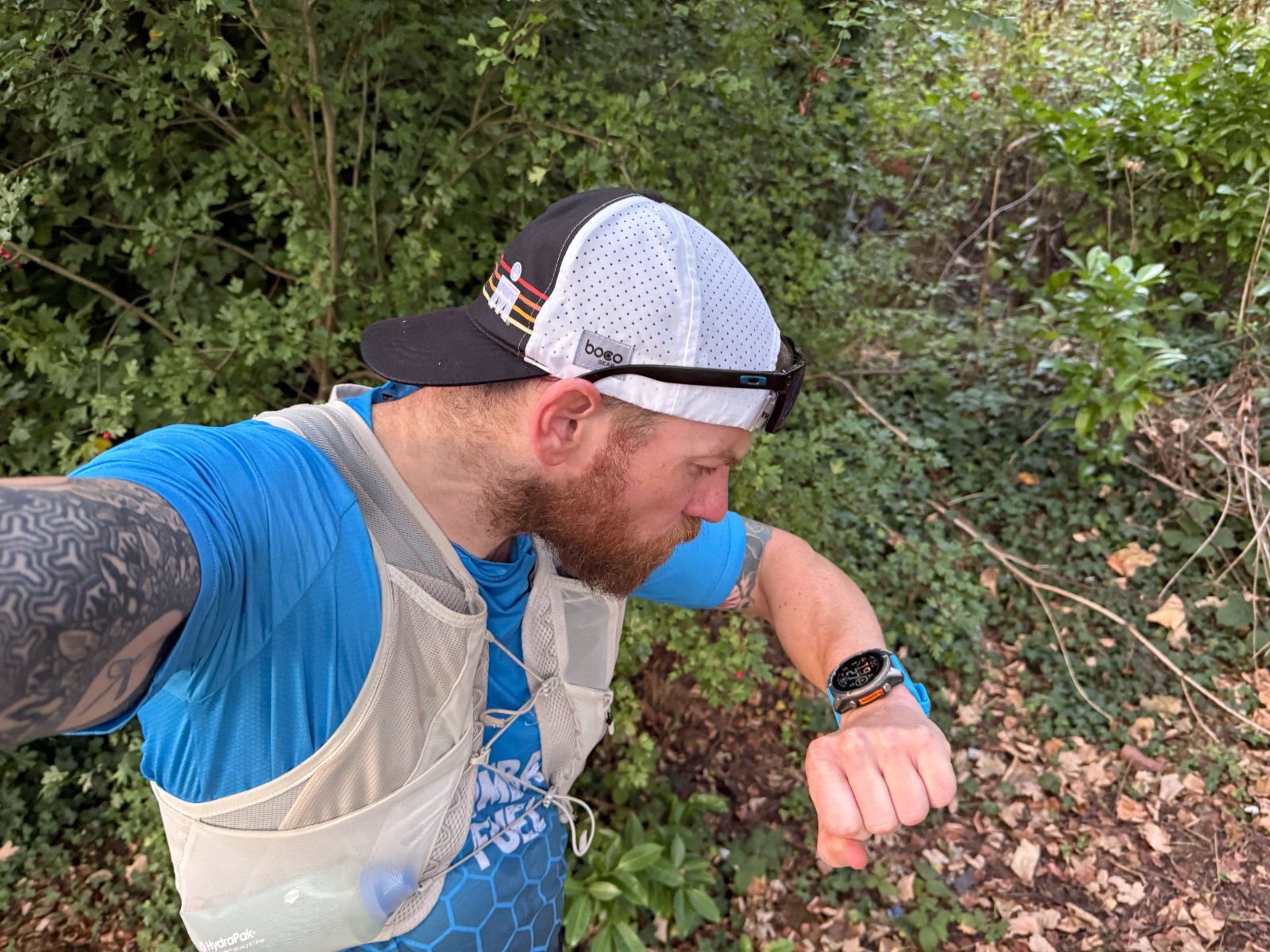
So, firstly… I am a big fan of low-intensity running. I am not going to list all the physiological benefits here, plenty of people already have. What I want to talk about is a much simpler problem: an easy run stops being easy the moment you obey a number on your watch instead of listening to your body.
BLUF: Pace and heart rate are useful reference points, not commands. Let the purpose of the session (and your rate of perceived exertion) make the call.
The problem with slavishly following the numbers
Here is what I see all the time. Someone decides their easy pace is, say, 5:30 per kilometre. So they head out and hold 5:30 no matter what. Legs feel heavy, it is warm, they slept badly, but the watch says 5:30, so they push to hit it.
And I get it. There is something reassuring about a target. It feels like progress. It uploads nicely.
That being said… if you are grinding to hit a pace, that run is not easy anymore. You have quietly changed the session from low intensity to moderate, and you have missed the point of it entirely.
The numbers on the screen are data. They are not context. Your body is the context.
Why heart rate moves around on you
Heart rate feels precise, so people trust it like gospel. But your heart rate on any given day is affected by a long list of things that have nothing to do with your fitness.
- Hydration status
- Stress and poor sleep
- Caffeine intake
- Heat, humidity and altitude
- Accumulated fatigue from previous sessions
- Even something as simple as being unwell or run down
So a heart rate that sits five or ten beats higher than usual does not automatically mean you are working harder. It might just mean you had a strong coffee, slept badly, and it is warm out.
The tricky bit is the lag too. Heart rate takes time to respond, so at the start of a run it can read low while you are actually working, and it can stay elevated after a hill even once the effort has dropped. Chasing it in real time can send you all over the place.
Why pace misleads too
Pace has the same issue in a different disguise. Your "easy pace" is not a fixed thing. It is the pace that produces easy effort today, and that changes.
For example:
- Run the same route into a headwind and the effort at your usual pace shoots up.
- Add some hills and holding that flat-ground pace becomes a hard session.
- Come off a heavy week of training and everything feels tougher.
- Run in the heat and your body is doing extra work just to cool itself.
So if you blindly hold a pace you decided on weeks ago, you can drift well above the effort you intended, without ever realising it. You still get a run in. You just do not get the run you were trying to do.
Use RPE as the decision-maker
This is where rate of perceived exertion (RPE) earns its place. RPE is simply how hard the effort feels to you, usually scored out of 10, with 1 being a gentle stroll and 10 being an all-out effort.
It sounds vague. It is actually the most honest tool you have, because it accounts for everything the watch cannot: how you slept, the wind, the heat, the fatigue, all of it, baked into one number that reflects reality on the day.
For an easy run, you are aiming for roughly a 3 to 4 out of 10. Conversational. You could hold a chat without gasping. Nose-breathing is comfortable for most of it. Nothing feels like a strain.
So what that means is: if your intended easy run creeps above a 4, you slow down. You do not defend the pace. You do not defend the heart rate. You bring the effort back under control and let the numbers be whatever they are.
A simple way to run it
Here is what to do on your next easy run:
- Before you start, remind yourself of the purpose. This session is about a specific, low-intensity stimulus, not proving your fitness.
- Run by feel first. Aim to sit at that 3 to 4 out of 10.
- Use the watch as a reference, not a boss. Glance at it, note the pace and heart rate, then keep making decisions off how you feel.
- If the effort climbs, slow down. Every time. Yes, even if that means walking a hill.
- Afterwards, look at the data with your RPE in mind. Over time you start to learn what your easy effort actually looks like on a good day versus a rough one.
The key message here is that you are not throwing the watch away. Data is genuinely useful, especially for spotting trends across weeks and months. You are just changing who is in charge. The purpose of the session leads, your body provides the context, and the numbers support the decision rather than dictating it.
The mindset shift
Most people who get this wrong are not lazy. They are the opposite. They are competitive, driven, and slightly allergic to running slowly because it feels like they are not trying.
But here is the thing. The goal of an easy run is the right stimulus, not an impressive upload. Nobody is going to hand you a medal for running your easy days too hard. All you get is a session that failed to do its job, and a bit more fatigue to carry into the sessions that actually matter.
Better to be consistently good than sporadically great. Easy days done properly are what let you go hard when it counts.
If you deal only in numbers, you will end up ignoring the one source of information that never lies to you: how the effort actually feels. Let the watch inform you. Let your body decide.
If you have any questions, queries or concerns about your training intensity, don't sit on them, let me know.