
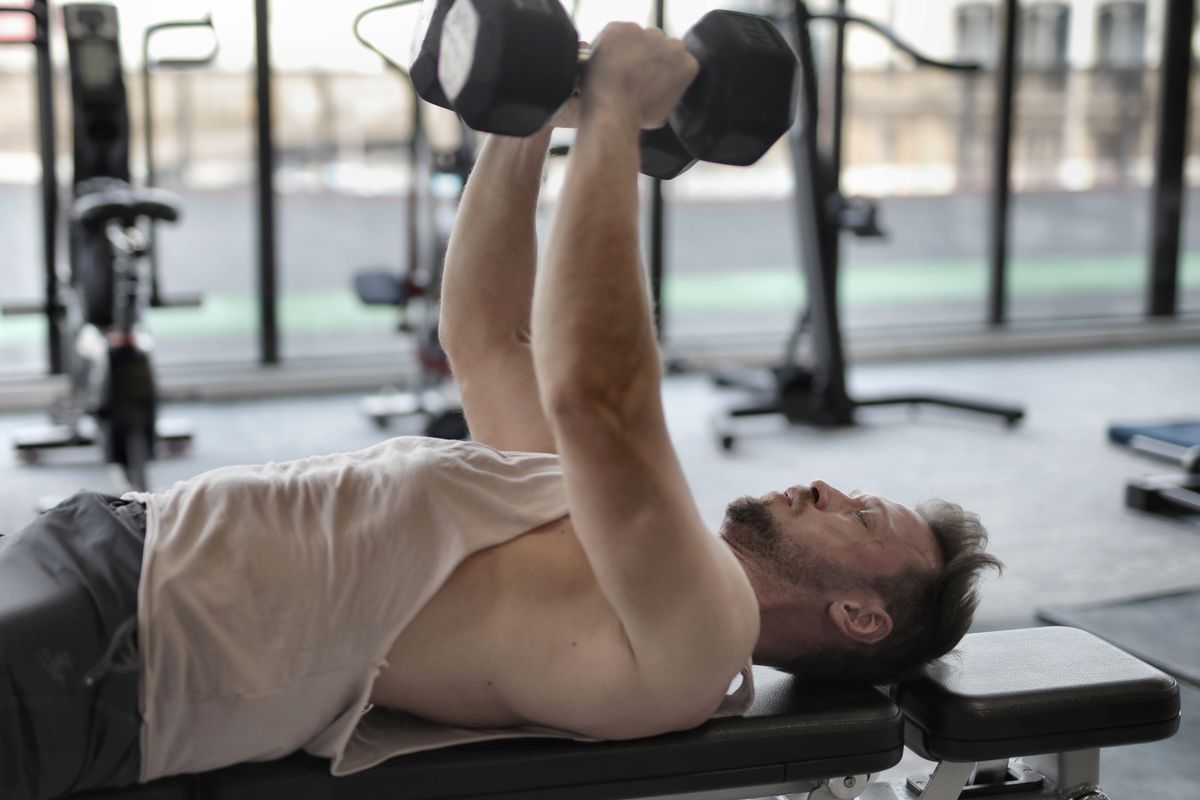
"Do I really need to lift?" is a fair question when your training week is already full. Strength work is the session most endurance athletes drop first when life gets busy.
It is also the one that would have kept them running into their fifties and sixties, so let's look at why.
BLUF: from around 40, you lose muscle and bone unless you do something about it. Two sensible strength sessions a week is that something.
What actually changes after 40
Nothing dramatic happens on your fortieth birthday. But from roughly that point, muscle mass and bone density start to decline gradually unless you give the body a reason to hold onto them. The clinical terms are sarcopenia and osteopenia, and resistance training is the most direct counter to both.
Recovery shifts too. It tends to be a bit slower and a bit less complete, partly through reduced muscle regenerative capacity and a more pronounced inflammatory response to hard work.
So, what that means is: you do not need to train less. You need to train with a bit more intent about what goes where.
Why it makes you faster, not just sturdier
A common worry is that lifting will make you heavy or slow. In practice, that is not what happens with the kind of strength work endurance athletes need.
What it does give you:
- Durability. Stronger tendons, better hip and glute function, fewer of the niggles that wipe out a training block.
- Economy. A stiffer, more efficient stride costs you less energy at the same pace.
- Bone. Loading matters, and it matters more in low-impact sports. Cycling and swimming do very little for bone density on their own.
- Late-race strength. The last 10km of a 70.3 is largely a muscular endurance event.
Research in masters athletes has found that regular strength and sprint training counteracts age-related bone decline, with benefits tracked over a full decade of follow-up. That is a long-term health return, not just a performance one.
What the sessions look like
Simple, heavy enough to matter, and short enough to actually happen. Two sessions a week, 35 to 45 minutes.
Here's what to do:
- Pick compound movements. A squat pattern, a hinge pattern (deadlift or hip thrust), a push, a pull, and something single-legged (split squat, step up).
- Work in the 5 to 8 rep range for the main lifts, leaving 2 or 3 reps in reserve. Heavy enough to be a real stimulus, controlled enough to be safe.
- Add calf and foot work. Unglamorous, and it is where a lot of running injuries begin.
- Progress slowly. A little more weight or one more rep every week or two. Nothing crazy.
- Place it well. Same day as a hard session if you can, so easy days stay genuinely easy. Not the day before your long run.
If you want to know how hard "hard enough" is, our RPE guide covers reps in reserve and how effort maps to a percentage of your one rep max. It takes the guesswork out of loading.
The intensity conversation
Masters athletes can absolutely still train hard. The evidence does not support wrapping yourself in cotton wool.
That being said, be strategic with it. A reasonable guide is around two genuinely hard sessions a week across all your training, and avoid stacking high-impact intense work on back-to-back days. Everything else easy.
Try this: look at your week and count the hard days. If it is four or five, that is usually the thing to fix before adding anything new.
Starting from nothing
Ok, no worries… if you have not lifted before, or not for years, the first four weeks are about learning the movements and letting connective tissue catch up.
Light weight, more reps, a coach or a good video to check your positions. Expect to feel it for a few days at first. That settles.
The key message here is: get the two sessions into the diary as a habit before you worry about the programming. Accountability is the bridge between motivation and discipline.
The bottom line
Strength work is not the optional extra you do when there is time left over. Past 40 it is the thing protecting your ability to keep doing the sport you love.
Two sessions a week. Compound lifts. Sensible progression. That is most of the benefit, for about 90 minutes of your week.
If you want a hand working out where strength fits around your training, don't sit on it, let me know.