
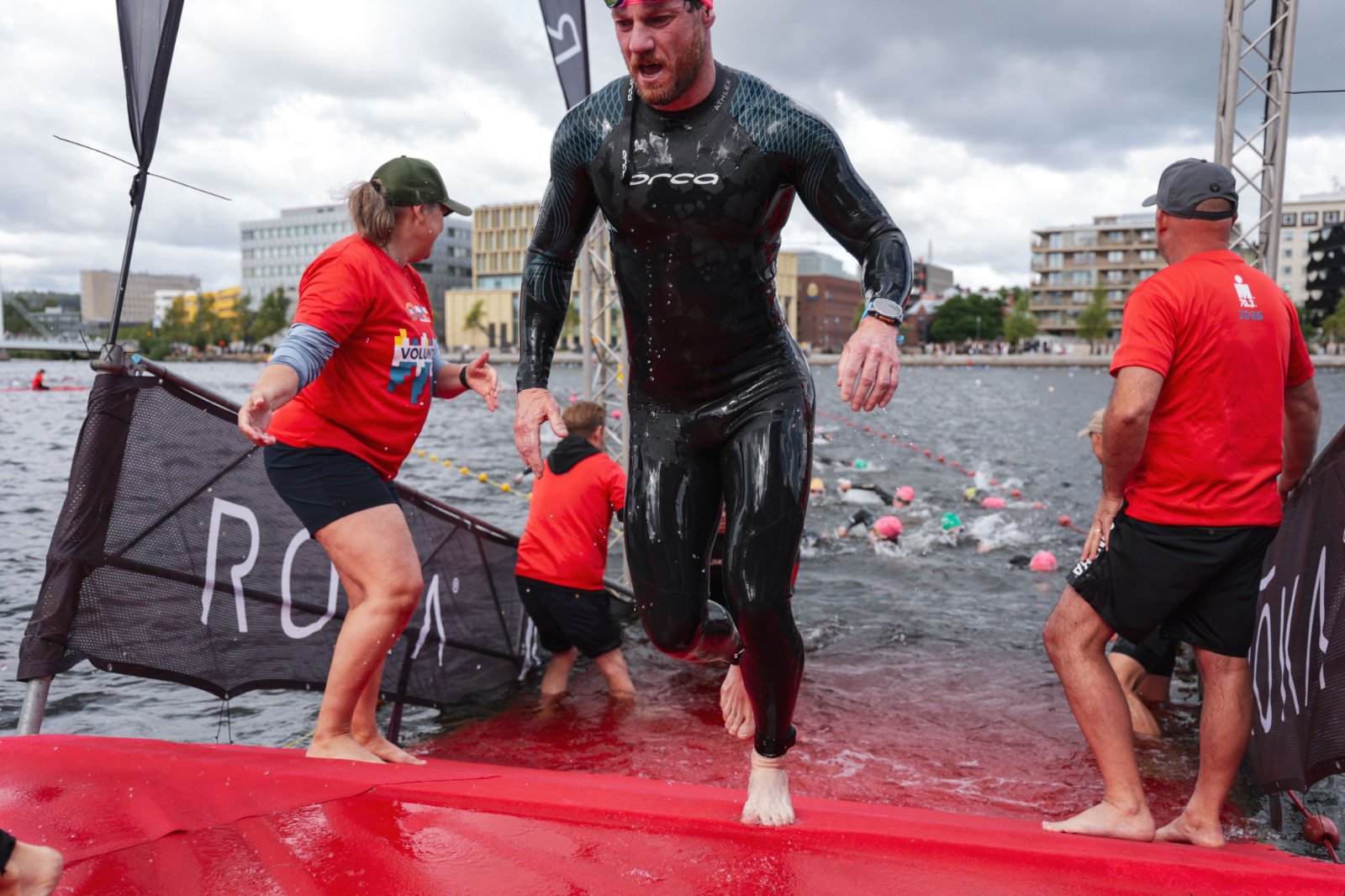
So, firstly, a confession. For a long time I said exactly what you have probably said, or thought: "I am just there to survive the swim." Get to the bike, get on with the real racing. I said it, I meant it, and I got away with it. But I was wrong about what it was costing me.
BLUF: You do not need to become a super competitive swimmer, but treating the swim as disposable limits what it can give you. Better swimming builds fitness, skill, confidence and organisation, and it lets you begin the rest of the race in control rather than just relieved.
Why "survive the swim" feels so safe
I get it, I have been there. The phrase is popular for a reason. It takes the pressure off.
If your background is running or cycling, the water can feel like someone else's sport. Open water is genuinely intimidating: no black line, no wall to grab, other people swimming over the top of you. Saying "I only need to survive" is a way of protecting yourself. It quietly gives you permission to not really try.... to miss those early morning swim sessions and pass them off as "extra anyway".
And here is the thing. It is relatable, it is honest, and for a lot of people it works well enough to finish. So I am not here to shame anyone who feels this way. If the swim scares you, that is normal, and you are far from alone.
The cost of staying attached to it
That being said, the story you tell yourself shapes what you do. And "survive the swim" is a story that keeps you stuck.
If the swim is only something to endure, you will train it the least, respect it the least, and turn up to race day the least prepared for it. Then you spend the opening chunk of your event with your heart rate spiking, your breathing all over the place, and your head full of stress.
So, what that means is this: you do not just have a slow swim. You start the bike already flustered. You carry that stress into the first 20 minutes on the road, when you should be settling in and eating. The "bit you survive" leaks into the parts you actually care about.
The key message here is that a rushed, panicked swim is not a neutral start. It is a bad one.
What purposeful swim training actually gives you
Alright, so let us talk about the upside, because this is where it gets interesting. Committing to the swim gives you far more than a faster split.
- Low-impact aerobic fitness. Swimming builds your engine without pounding your joints. For busy people over 35 carrying a bit of run and bike load, that is valuable. It is aerobic work your legs get a rest from.
- Technical skill and body awareness. Swimming rewards technique more than brute effort. Working on it makes you a better mover generally: breathing under control, better body position, a feel for pacing that carries into the rest of the race.
- Confidence in open water. This is the big one. Being calm when the water is choppy and crowded is a skill you can practise. When you trust yourself in the water, the whole event gets less daunting.
- Better race-day positioning. Exit the water in control and you are not fighting through a wall of people at your bike. You start the ride with a plan, not with panic.
- Organisation and discipline. Pool sessions do not happen by accident. Getting yourself to the water regularly forces you to plan your week, and that discipline spills into everything else. As we all know, the pursuit of a physical challenge is really the pursuit of a more organised, more deliberate life.
That last point matters more than people think. The swim is often the session that gets skipped first, because it needs a pool, a slot and a bit of admin. So getting consistent with it is a training win in its own right. Better to be consistently good, than sporadically great.
You do not need to be quick, you need to be composed
Let me be clear, because I do not want this read as "go and become a swimmer". You do not have to.
The goal is not a podium swim split. The goal is to come out of the water composed and ready to race, rather than gasping and grateful it is over.
Those are two completely different mornings. One starts your race with control. The other starts it with damage limitation.
And composure is largely trainable. A lot of the panic in open water comes from breathing, not fitness. British Triathlon's own guidance points to controlled breathing and gradual exposure as the way to manage open-water anxiety, rather than just trying to be fitter (British Triathlon open water tips). So the fix is often skill and familiarity, which any of us can build.
How to give the swim its fair share
Here is what to do, without letting the swim take over your week:
- Make it non-negotiable, not enormous. Two swims a week, done consistently, beats one big heroic session followed by three weeks off.
- Spend time on technique, not just laps. A handful of drills and some easy, controlled swimming will do more than thrashing out distance you cannot hold form for.
- Practise the race, not just the pool. If your event is open water, get into open water before race day. Practise sighting, practise starting with your heart rate up, practise calming it back down.
- Rehearse the exit. Getting out of the water and into transition without your head spinning is a skill. Train it a few times and it stops being a shock.
None of that requires you to love swimming. It just requires you to stop treating it as disposable.
The reframe
So, to bring it back to where we started. I used to say I was just there to survive the swim. What changed is not that I became a great swimmer. It is that I stopped treating the first part of my race as something to endure and started treating it as something to use.
Give the swim the same respect you give the bike and the run. Not the same volume, not the same obsession, just respect. Do that, and it gives you fitness, skill, confidence and control, and it hands you the rest of the race in a much better state than "survived".
To get something you have never had, you need to do something you have never done. If you have always survived the swim, maybe it is time to actually train it. If you have any questions, queries or concerns about where to start, don't sit on them, let me know.