
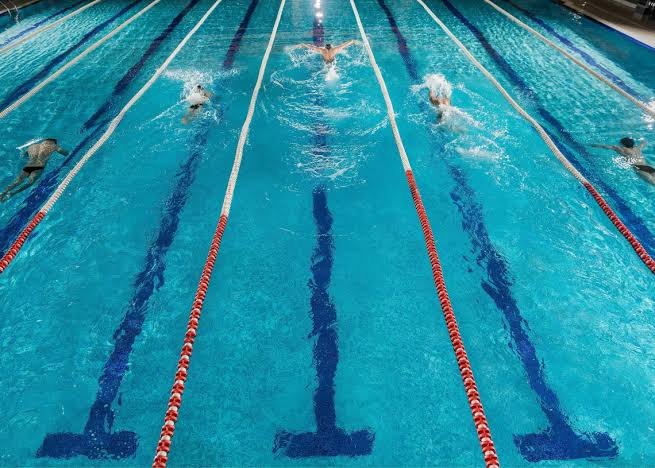
Knowing where to take your rest periods in your swim set might seem like such a small thing to think about... but not knowing can derail someone else's, and your, session.
BLUF: Check the lane's direction of travel, and rest on the side that you come in on, not the side you kick off from. If it is a crowded lane, keep the centre of the wall clear so other swimmers can turn safely.
The crowded-wall problem
Picture a busy lane. Three or four people doing lengths, roughly similar pace, no real plan between them. Everyone finishes a length and stops dead in the middle of the wall, right where the next swimmer needs to turn.
So what that means is the person behind has to brake, sit up, work out which way to go round you, and lose their rhythm completely. In a hard set, that is just really frustrating... and needless.
And here is the thing: it is not about who is fast and who is slow. A beginner who stops in a sensible place is easier to share a lane with than an experienced swimmer who parks themselves in the turning line. This is a habit, not a fitness level.
Understand the lane's direction of travel
Most lanes, run on a circuit. You swim up one side of the lane and back down the other, like traffic on a road, so swimmers keep passing each other without colliding head-on.
There is no universal standards. Some pools even change the direction between sessions.
So, firstly I would say: check the lane sign. Most pools display the direction, and many also sort lanes by pace (slow, medium, fast). If there is no sign, look at what the people already in the lane are doing and copy them. Public pool guidance from Swim England covers this if you want the official version.
The key message here is that the exact side varies by pool, but the principle underneath it does not. Once you know which way the lane turns, everything else falls into place.
Where an active swimmer needs space to turn
Think about what happens when someone is still swimming and comes into the wall to turn.
On a circuit, they approach on their side of the lane, cross the lane near the end, touch or tumble-turn at the wall, pushing off on the other side to start the next length. That turn happens at, and just to the side of, the centre of the wall. They need that space clear.
So the centre of the wall is not a parking spot. It is the busiest bit of the whole lane. It is where every turn happens, from everyone, every length. If you stop there, you are standing in the one place that needs to stay open.
For example: if the lane runs anti-clockwise, swimmers come in on the right, turn, and leave on the left. The middle is live traffic the entire session.
Where a resting swimmer should move
Here is what to do when you finish a length and go to take your rest:
- Finish your length as normal, coming into the wall on your swimming side of the circuit.
- Move into the corner, to the side of the wall that you came in on. Tuck yourself into the corner where the wall meets the lane rope.
- Leave the centre clear so anyone still swimming can turn without having to go round you.
If the lane is anti-clockwise and you come in on the right, slide into the right-hand corner to rest. That keeps you out of the way of people turning and out of the way of anyone pushing off on the left.
If you are doing a set with clear rest intervals, the same rule applies every single time. Come in, step to the corner, rest, push off when it is your turn. It becomes automatic quickly.
One more thing. When you are coming into turn, if you can have a quick look behind you first. Pushing off straight into someone coming into the wall is the other half of this problem, and a glance over your shoulder solves it....
... yes, they should be keeping their distance from you to avoid that too, but you are still going to get a face full of them, so why not look out for you!?
Be predictable and leave the turning line clear
If you take one idea from all of this, make it predictability. Other swimmers can share a lane with you easily when they can guess what you are going to do.
That means:
- Check the lane direction before you get in, from the sign or from the people already swimming.
- Approach and turn on the expected side, so nobody has to guess which way you are going.
- Stop in the corner, not the centre, so the turning line stays open.
None of this requires you to be a good swimmer. It requires you to be a considerate one, and the two are not the same thing.
If someone is clearly faster and catching you, let them past at the wall. You will either know / sense they are there, or they will gently brush your ankle / foot mid length to let you know...
A quick pause in the corner to wave them through costs you a few seconds and keeps the whole lane moving. As we all know, the person who makes a shared space work better is always welcome back.
So, to bring it together: know the direction, turn where people expect you to, and rest where you are out of the way. Do that and you will be the swimmer people are happy to share a lane with, whatever your pace.
If you have any questions, queries or concerns about getting your pool sessions working for you, don't sit on them, let me know.