
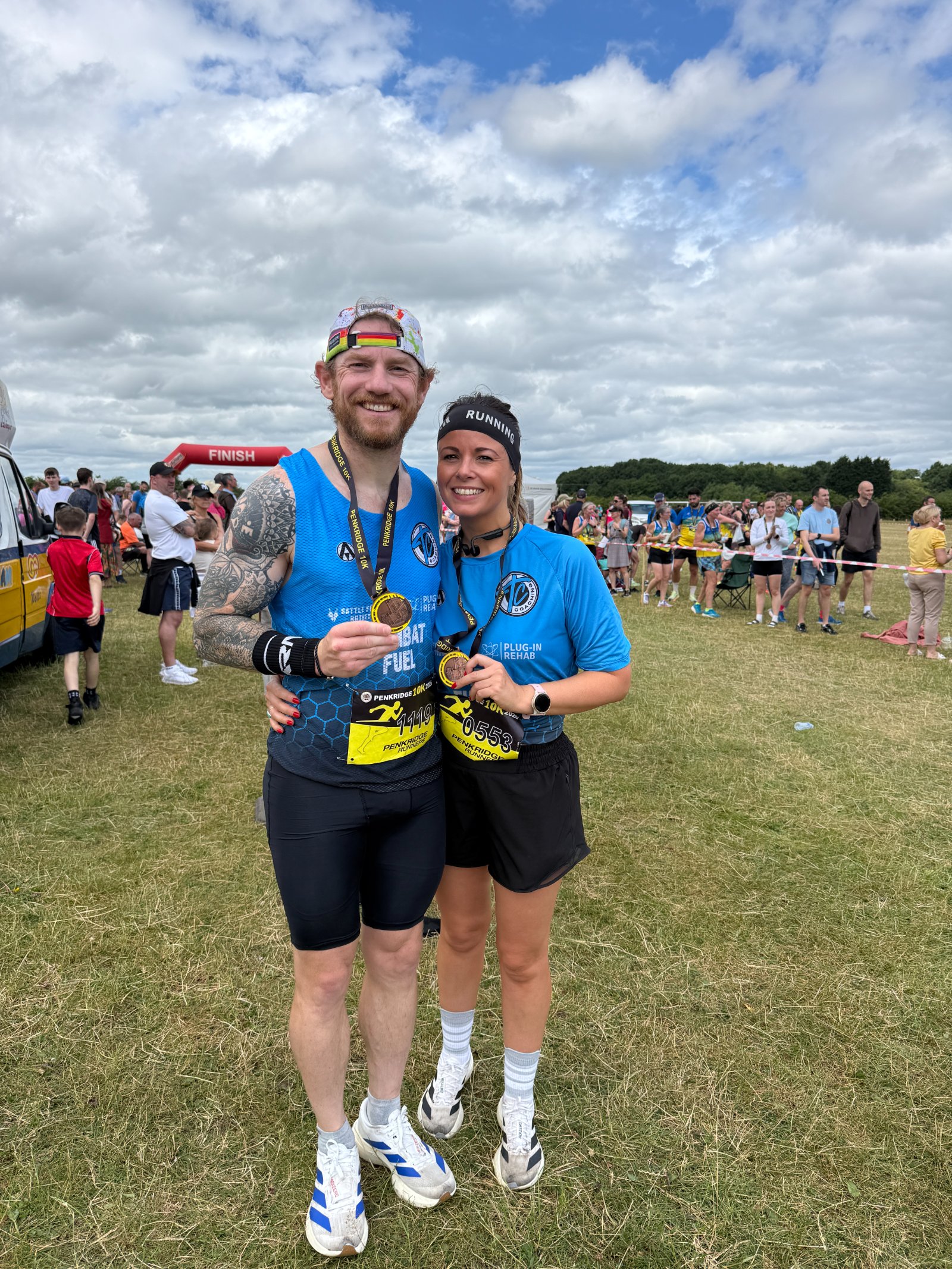
I do love when Emma sends me voice notes when she is training... and the one the other week inspired this article:
"Why is the first km of a run so shit?"
Because she is right. For a lot of runners, that opening kilometre feels harder than it has any business being. Legs heavy, breathing ragged, brain already negotiating an early finish. Then a few minutes later it settles, and the same pace feels fine.
BLUF: The first kilometre feels rough because your body is still moving from rest into work, and it usually settles once it catches up. Use that knowledge to get the first thing done, then reassess.
What is actually going on when you start
When you go from sitting still to running, your body does not flip a switch and arrive at its working level instantly. Heart rate, breathing, blood flow to the muscles and oxygen use all have to ramp up towards the new demand.
So, what that means is: for the first few minutes, there is a gap. The demand is there, but the systems that meet that demand are still climbing towards it. That gap is a big part of why the pace can feel harder than it should, even though nothing is wrong.
The research on this is genuinely interesting. Oxygen uptake at the start of exercise rises gradually towards the new requirement rather than changing all at once, and doing some exercise beforehand can speed that response up. This is often called "priming". You can read a proper review of oxygen-uptake kinetics here: Jones et al., oxygen uptake kinetics review.
I want to be honest about the limits of that, though. The exact mechanisms are complex and still debated. It is not as simple as "your muscles are waiting for oxygen to turn up". Changes in how the muscle uses oxygen and how motor units are recruited seem to matter too, and extra oxygen delivery and warmer muscles do not explain the whole effect. So take the principle, not a neat one-line myth.
Why a warm-up helps
A warm-up does more than nudge your heart rate up. As muscle temperature rises, a lot of things change together: blood flow, how readily oxygen is released, the speed of chemical reactions in the muscle, nerve conduction, and even the mechanical resistance of muscles and joints.
Muscle temperature starts climbing quickly in those opening minutes. That is part of why movement often feels smoother once the body has had a chance to adjust. If you want the detail, there is a good overview of warm-up physiology here: Bishop, warm-up physiology review.
And I think this is the useful bit. That early discomfort is largely a transition, not a verdict on how the rest of the run will go.
A quick myth to bin
You will hear people say the first kilometre feels bad because of lactic acid, and that warming up "clears the lactic acid". That is not supported by the evidence and it is worth dropping. The transition is about your systems ramping up towards the demand, not about flushing something out. If anyone tells you otherwise, be a little sceptical.
It is not exactly one kilometre
I should say this plainly: the first kilometre is not some precise physiological line. Not everyone feels better at exactly 1km on the nose. The transition depends on your pace, your fitness, the conditions, how tired you are and just who you are as an individual.
There is one thing you can control that makes a big difference, though. Starting too fast. If you tear off the line, you turn normal early discomfort into a genuinely badly paced session, and then it does not settle, it just gets worse. So ease into it. Let the body catch up.
Try this: treat the first kilometre or two as part of the warm-up, not part of the effort. Deliberately hold back. Then find your pace once things feel smoother.
Now the useful bit: do the first thing
Here is where the physiology connects to the way I actually coach. My golden rule is simple: do the first thing.
Do not negotiate with the whole session before it has started. The full run. The full ride. The full swim set. The full gym session. That is far too big a thing to decide on when you are cold, comfortable and full of reasons not to.
Instead, shrink the decision. All you have to do is:
- Get the kit on.
- Get out the door.
- Do the warm-up, or the first easy kilometre, or the first controlled interval.
- Then, and only then, reassess.
Because here is the thing. Once you have done the first thing, you are making the decision with better information. You are past the worst of the transition. Your body has caught up. That miserable opening now sits behind you rather than in front of you.
Most of the time, you will just keep going. Not because you found a burst of motivation, but because the hardest part was already behind you.
Use the knowledge before you start too
This is the part I really want you to hold onto. The fact that it usually gets better is not just a nice thing to notice halfway through. It is a tool you can use before you have even laced up.
When you are stood there dreading it, remind yourself: the first bit feels hard because my body is still adjusting, and it almost always settles. That is a familiar transition, not proof the whole session will be awful.
And when that early discomfort does arrive on the run, name it for what it is. "Ah, there it is, the usual rubbish first kilometre. It settles from here." That small reframe takes a lot of the sting out of it.
So, firstly, stop treating the first kilometre as a signal about the whole run. It is not. It is your body waking up.
The takeaway
The key message here is this: the opening of a session feeling hard is normal, expected and temporary. It is the cost of moving from rest into work, and it fades.
So do not let it make the decision for you. Do the first thing. Get the warm-up done, get through that first easy kilometre, then judge how you feel with the transition behind you rather than in front of you.
Better to be consistently good than sporadically great. And consistency, more often than not, comes down to being willing to do the first thing on the days you least fancy it.
If you have any questions, queries or concerns about pacing, warm-ups or just getting yourself out the door, don't sit on them, let me know.