
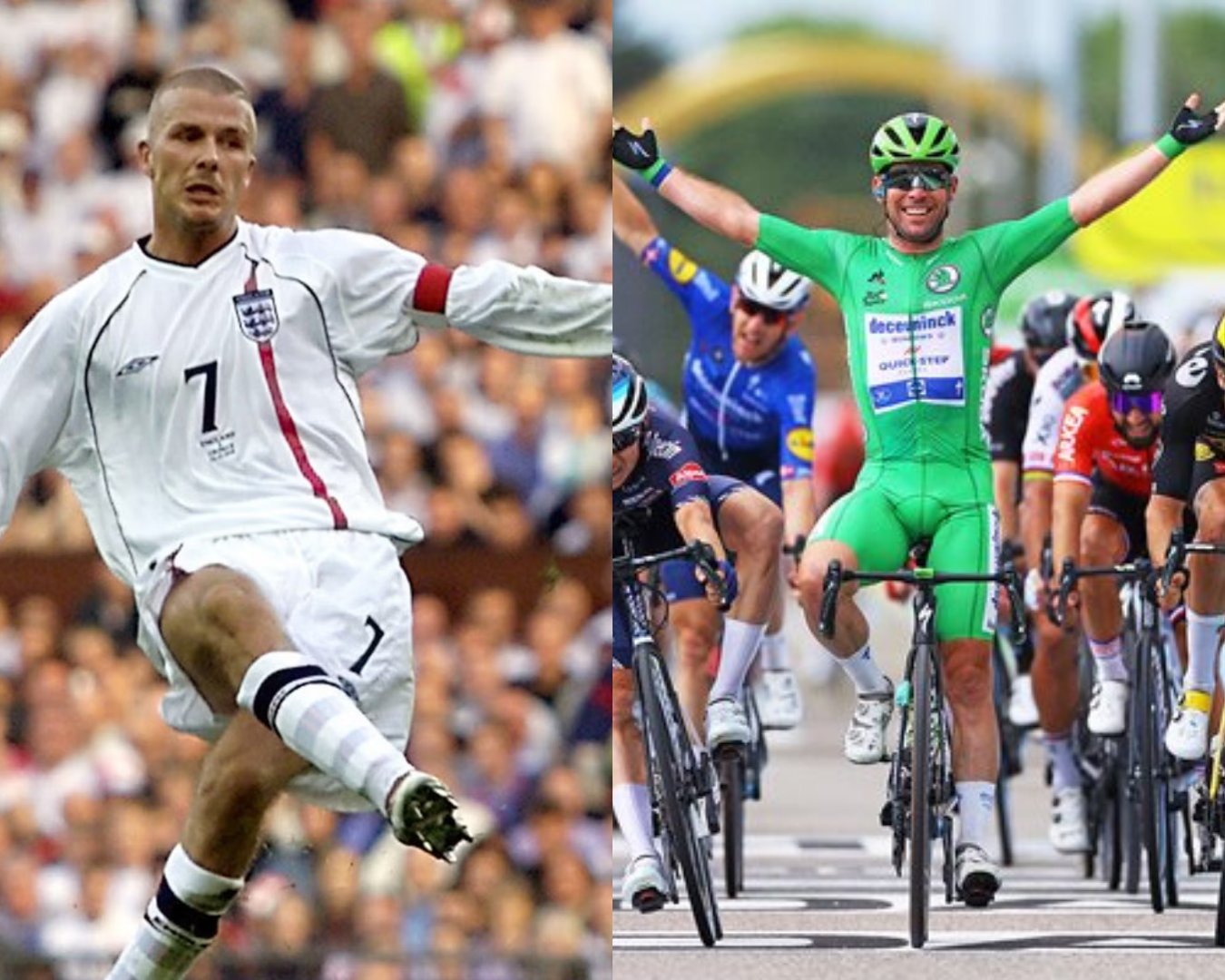
My son Harrison asked me the other day if I had a sporting hero. I told him I had two, and I couldn't choose between them: Mark Cavendish and David Beckham.
BLUF: A sporting hero is not about their medals. It is a living example of how to respond to adversity and keep pursuing a higher standard when your own progress gets hard.
So, firstly I would say the answer surprised him, because he expected me to pick one. But the more I thought about it, the more I realised both men represent the same thing to me: challenge, adversity, and the continual pursuit of performance.
And I think that is the real reason to have a sporting hero. Not to copy their talent. To borrow their standards when you need them.
The common thread
On the surface, Beckham and Cavendish could not be more different. Football and cycling. A midfielder and a sprinter. Two completely separate worlds.
But look past the sport and the thread is obvious. Both of them were judged harshly, early and publicly. Both of them refused to let that judgement be the final word. And both of them kept honing their craft long after most people would have settled.
That is what I want Harrison to understand. The medals are the headline. The character behind them is the lesson.
Beckham: what you do next
Most people remember David Beckham's sending-off against Argentina at the 1998 World Cup. For a while he was close to the most vilified man in English football. Effigies, abuse, the lot.
But that moment is not his defining one. His defining moment is what came after it.
Because the real story is the comeback. The work, the leadership and the resolve it took to go from being booed by his own country to delivering the free kick against Greece in 2001 that sent England to the World Cup. Same stadium, same shirt, completely different man in the eyes of the public.
The key message here is simple: one painful moment does not have to define you. Character is revealed in what happens next. Beckham showed what it looks like to carry criticism, keep leading and still deliver when it matters most. You can read the arc of that comeback in his own words in coverage of his documentary work.
That is a lesson that has nothing to do with football. It is a lesson about how you respond to a bad day.
Cavendish: the relentless pursuit of mastery
Mark Cavendish was told as a youngster that he was too heavy to ever make it in cycling. That is a hard thing to hear when you love something.
He went on to win 35 stages at the Tour de France, more than anyone in history, finally moving past the great Eddy Merckx in 2024. You can read about that record-breaking stage win here.
But here is what matters. That success was not built on raw speed alone. It was built on obsessive study of his craft. Knowing the roads. Reading a sprint finish before it happened. Understanding the final kilometre in extraordinary detail, so that when the chaos came, he already knew where to be.
That is the relentless honing of a craft, through setbacks, injuries, team changes and doubt. The pursuit of excellence long after he had already proven himself.
And that, to me, is just as inspiring as the winning. Maybe more so.
"It's just sport"
Some people will say it is just sport. Adult PE. And you know what, they are right.
But I think they miss the point. Sport gives us some of the clearest, most public examples of human resilience we have. It is competition stripped back to effort, preparation and how a person behaves when things go wrong.
That being said, you do not need to be a professional athlete to take something from it. If you have any desire at all to physically improve yourself, a sporting hero gives you a reference point. A living picture of what perseverance, preparation and belief actually look like in practice.
Because when your own training gets difficult, and it will, it helps to have someone in your head who has been in a harder version of the same place and kept going.
How to choose yours
So, what that means is the choosing matters. Pick someone whose character matters as much as their results.
Here is what to do:
- Look past the trophies. Ask what they had to overcome, not just what they won.
- Forget your own sport. Your hero does not need to share it. They need to represent the character you want to build.
- Read about them properly. A highlights reel tells you nothing. The setbacks, the comebacks and the daily graft are where the lesson lives.
- Use them when it is hard. Not on the easy days. On the session you want to skip, or the race where it stops being fun.
For example: when your legs are gone at kilometre 15 of a half marathon, it is useful to remember that the people you admire most were not immune to that feeling. They just made a different decision about what to do with it.
The real reason
I did not expect Harrison's question to stay with me the way it did. But it made me realise how much I lean on these two examples without noticing.
Beckham taught me that you are defined by what you do next, not by your worst moment. Cavendish taught me that mastery is a decision you keep making, long after you have earned the right to stop.
Neither of them allowed someone else's judgement to be the final word. That is the standard worth borrowing.
So find your sporting hero. Read about them, learn about them, be inspired by them. And when your own pursuit of performance gets difficult, you will have somewhere to look.
If you have any questions, queries or concerns about any of this, don't sit on them, let me know.