
So, firstly… if you have ever stood in a gym about to try a new movement and thought "I am going to look like a bit of a t**t here!", you are completely normal. That feeling is one of the biggest reasons stopping people from trying new things, limiting their own progress... or from even going to the gym at all!
BLUF: confidence does not arrive before the movement, it comes from repeating it... oh, and to clue you in...almost nobody around you is actually watching you anyway.
Where this came from
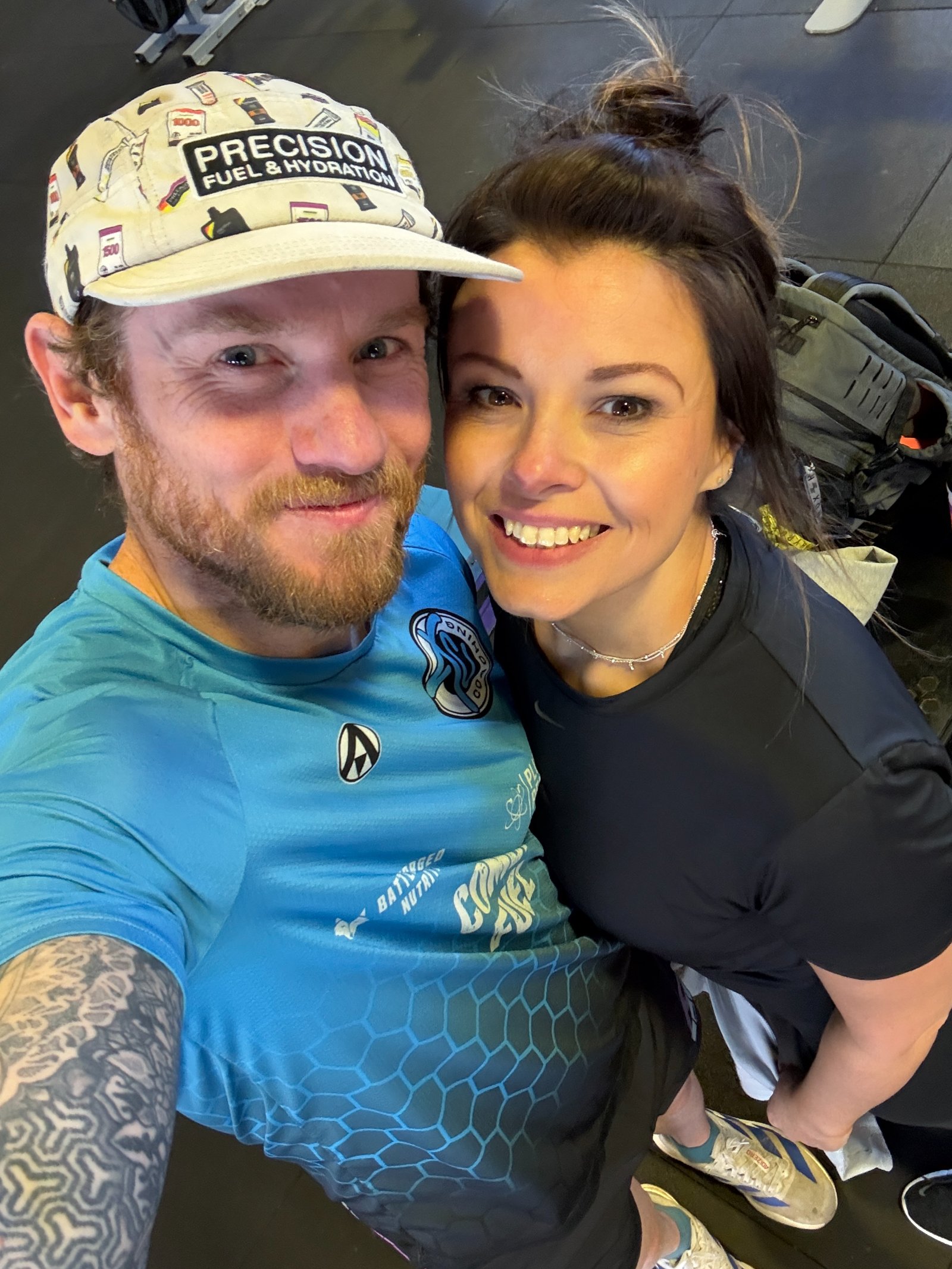
The idea for this article came from a voice note from my partner Emma:
"New content idea... how to not feel like a t**t at the gym while doing plyometrics!"
Relatively new to the gym, she has decided to take on a pairs Hyrox with me (less decided and more said she would like to try it once, and so I signed her up!) which means not only learning a lot of movements that are unfamiliar to her, but also doing things that any inexperienced person may not see the point in right away.
And of course, there is a hesitance. That is understandable. When I show her something new, there is that natural pause of "do I look daft doing this?"
But here is what I am genuinely proud of. She is doing it anyway. She has trained alongside me, asked for guidance, and gone off and looked movements up on YouTube herself.
The nerves have not vanished. She is just taking action despite them.
That, to me, is the whole game.
Why the gym feels so exposing
The gym can feel like a stage. Mirrors everywhere. People who look like they know exactly what they are doing. And then there is you, trying something you have never done before.
It gets worse the less common the movement is. If you are doing a bicep curl, fine, everyone does those. But start doing plyometrics, box work, or some odd-looking mobility drill, and the voice in your head gets louder. "Everyone is going to think I have lost the plot."
As we all know, that voice is very good at making noise. It is not very good at being right.
The first reframe: nobody is watching you
Here is the key message. Almost everyone in that gym is completely absorbed in their own session.
They are thinking about their own next set. Their own technique. Whether they have got enough time before they need to leave. Their own insecurities, because most people have them too.
They are not sat there studying you. They are not there to make fun of you. Honestly, they do not care what you are doing, because they are so focused on themselves.
That can sound a bit blunt, but it is actually freeing when it lands. The scrutiny you feel is almost entirely internal. You are your own audience.
And on the rare occasion someone does glance over? It is usually for half a second, and then they are back to their own thing. Nobody is keeping a running commentary on the new person trying box jumps or snap downs.
The second reframe: repetition beats hesitation
The first point is a mindset shift. This second one is practical, and it is the one that actually changes how you feel.
The reason a movement feels awkward is simple. It is unfamiliar. So the answer is not to avoid it, which only keeps it unfamiliar forever. The answer is to do it more often.
The more repetitions you do, the more comfortable you feel, and the less likely you are to think you look like an idiot. That is it. Familiarity does the work.
The trap I see is people isolating a new movement to only the two or three times a week they get to the gym. So the skill barely progresses, and every session feels like starting from scratch.
Here's what to do
- Break it down first. Take the movement and simplify it. If a full box jump feels like a lot, start with a step-up onto a low box, then a small jump, then build height. You do not have to arrive at the finished version on day one.
- Practise the pattern at home. A lot of movements can be rehearsed with no kit. A squat pattern, a hip hinge, a lunge, the landing mechanics of a jump. A few minutes in the kitchen counts, and it stacks up.
- Use YouTube properly. Watch the movement, then film yourself doing it if you can. Comparing the two teaches you more than any amount of worrying about what strangers think.
- Add controlled reps outside your main sessions. A short daily practice on a tricky movement will bring you on faster than three concentrated gym slots a week.
- Ask someone who knows. A quick bit of guidance shortcuts a lot of second-guessing. That is exactly what a coach, or a knowledgeable mate, is for.
Try this: pick one movement that makes you feel a bit self-conscious. Rehearse the pattern three or four times a day for a week, even if it is just the empty movement. Then see how it feels in the gym. I would bet it feels noticeably less alien.
Why this matters beyond the gym
There is a bigger principle here, and it applies to almost anything worth doing.
To get something you have never had, you need to do something you have never done. And the first few times you do something new, you will not be smooth at it. That is not a sign you are failing. It is a sign you are learning.
You comfort zone is like a plastic garden... it might be a nice place to live, but nothing ever grows there.
Growth happens when you are a little uncomfortable. The awkward, clumsy first attempts are the price of entry, and everyone who looks capable now paid it at some point.
The person who chose a challenge before they felt fully ready, then started building the skills to meet it, is doing exactly the right thing. Not because the nerves are gone, but because they are moving forward anyway.
The takeaway
You do not need to feel confident before you try. Confidence is the reward for the reps, not the requirement for them.
So the next time that voice pipes up in the gym, remember two things:
- Everyone else is focused on themselves, not on you.
- The awkwardness fades with repetition, so do the movement more, not less.
You are not looking like an idiot. You are looking like someone who is learning. And that is a good thing to look like.
If you have any questions, queries or concerns about getting started, don't sit on them, let me know.